
Repair or Replace a Cracked Glass Pane: How to Tell the Difference
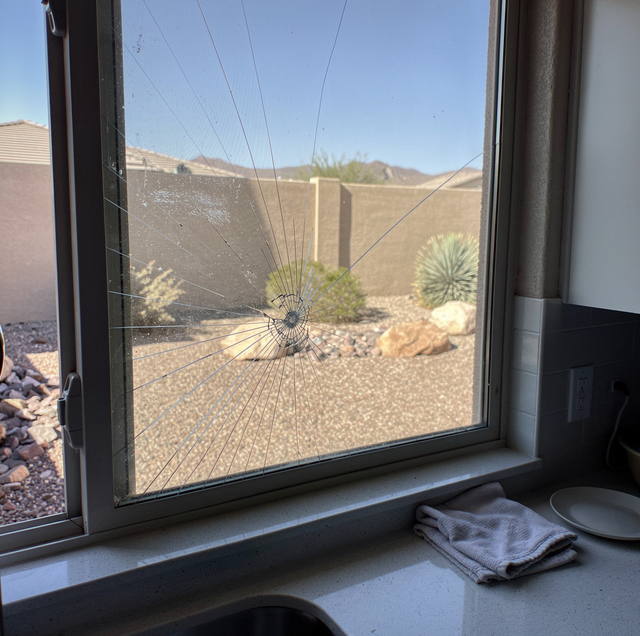
Quick Answer: A short, stable crack that sits away from the edge of the pane, with no fog forming inside an insulated unit, is often a candidate for a contained repair. A crack that reaches the edge, branches, sits near a corner, or shows a broken seal means the pane needs to be removed and replaced. Size, location, and seal condition decide the call, not how the crack happened.
A crack in a glass pane rarely announces how serious it is. One might sit in the corner of a patio door, a thin gray line no longer than a finger, barely visible unless the light catches it. Another might run halfway across a shower panel, forking into two smaller cracks that seem to grow every week. Both look like glass damage. Only one of them is still a candidate for a contained repair.
Homeowners and property managers tend to ask the same question either way: patch it, or pull the whole pane. The answer depends on a short list of physical factors, not on what feels cheaper in the moment. Read it wrong, and you either pay for a swap you didn't need or patch a pane that was already done, only to replace it anyway a few months later.
What a Crack Actually Tells You
A crack is a break in the glass structure, and how far it travels through that structure changes what can be done with it. Three things matter most: how long the crack is, where it sits on the pane, and whether it has reached the edge or a corner.
A short crack sitting in the open field of the glass, away from any edge, is contained by the surrounding material on every side. A crack that touches the perimeter is different. The edge carries the most stress from the frame, temperature swings, and the weight of the pane itself, so a crack that reaches that zone has an open path to continue traveling whenever the glass expands or contracts.
Corners are worse still. A pane concentrates stress at its corners more than anywhere else, so a crack starting at or running into a corner has the shortest path to becoming a full break, and it's usually the fastest-spreading kind.
The Repair Path: What a Repair Can Actually Fix
Glass repair covers a narrower set of situations than most people assume, and it works best on damage that hasn't reached the structural threshold above.
Small chips and short cracks: A chip from an impact or a crack under a few inches that sits in the open field of the pane can sometimes be filled and stabilized rather than replaced outright. The fill doesn't restore full strength, but it stops the crack from spreading and improves clarity at the damage site.
Edge seal repair, caught early: A dual-pane or triple-pane window relies on a bonded seal around its spacer to keep gas in and moisture out. If that seal has only just started to loosen, before any fog forms inside the unit, a resealing repair can sometimes buy the unit more service life. Once fog actually appears between the panes, moisture has already gotten in and resealing no longer applies; that unit gets replaced as a sealed component.
Surface scratches: Not every mark is a structural crack. Light surface scratches from cleaning tools or hardware can sometimes be polished out as a cosmetic fix, but only when the glass hasn't actually cracked through.
Repair keeps the existing pane and frame in place, which is its advantage. Its limit is just as plain: it only works while the crack stays contained, the seal stays mostly intact, and the pane isn't being asked for structural work it can no longer do.
The Replacement Path: When the Whole Pane Has to Go
Certain conditions rule out repair entirely, and patching damage like this only delays a replacement that was always coming.
A crack that reaches the edge or a corner: Once a crack has an open path to the frame, the glass is compromised as a structural component, not just a cosmetic one, and filling it doesn't restore the strength lost at that point of connection.
Branching or spreading cracks: A single hairline crack behaves very differently from one that has split into two or three legs. Branching signals glass that is actively failing, not holding a stable, isolated flaw.
A failed seal on an insulated unit: Fog, haze, or a milky film between the panes means moisture has already worked into the sealed gap. That gap can't be dried out or resealed from outside once it's compromised; the whole sealed unit gets replaced.
Cracked glass in a safety-glazing spot: Panes next to doors, near tubs and showers, or at the bottom of stairways are often required to be tempered or laminated safety glass, since a fall or impact there is more likely. A crack in one of those spots calls for a properly rated replacement pane for that location, not a stabilized patch.
Any crack in a large or high-set pane: A cracked pane that's large, heavy, or set well above the floor carries a real risk of coming loose if it's disturbed, so those get handled as replacement jobs by someone experienced with the removal, not a patch attempt.
Repair vs Replacement at a Glance
| Factor | Repair Fits | Replacement Fits |
|---|---|---|
| Crack length | Short, a few inches or less | Long, or running the width of the pane |
| Crack location | Open field, away from edges | Touches the edge or a corner |
| Crack pattern | Single, stable line | Branching or spreading |
| Insulated-unit seal | Intact, no fog between panes | Broken, with fog inside the unit |
| Safety glazing zone | Not required at that spot | Required near doors, tubs, or stairs |
| Pane size and position | Small, easy to reach | Large, heavy, or set high |
| Cost factors | Narrower labor and material scope | Full sealed unit and coatings add scope |
| Typical timeline | Often handled in one visit | Custom-built unit, so it carries lead time |
| Result | Extends the current pane's life | Resets the clock with a new sealed unit |
Use the table as a filter, not a final answer. A pane can fit most of the repair column and still fail on one line, like sitting beside a shower, and that single factor moves it into the replacement column no matter how small the crack looks.
Structural Integrity: Why Bigger Cracks Change the Calculus
Glass carries load across its whole surface, and a crack interrupts that path. A small, contained crack barely changes how the pane handles wind pressure, temperature swings, or the occasional bump. A longer crack, or one running through both layers of a laminated pane, removes a real share of the glass's ability to hold together under stress.
Laminated glass is built with an interlayer, so a cracked pane holds its shape instead of falling into loose fragments, but that only works if enough of the surrounding glass is still sound. Past a certain point, the interlayer is doing all the work, and the assembly sits closer to failing outright than to being a stable, repairable pane.
Weight and orientation matter too. A crack in a horizontal panel, like a tabletop or shelf, behaves differently under load than the same crack in a vertical window, since gravity and daily pressure act on it from different directions. A technician assessing the pane in person weighs this rather than judging by crack length alone.
Insulated Glass Units and the Seal Question
Insulated units, commonly two panes bonded around a spacer with a sealed gap between them, add a layer to this decision that single-pane glass doesn't have. The seal around that spacer is a manufactured part with its own service life, independent of the glass's strength.
A crack in the outer pane doesn't automatically mean the seal has failed, and a failed seal doesn't automatically mean the glass is cracked. They're two different failure modes sharing one assembly. A crack calls for an assessment of the glass; fog between the panes calls for an assessment of the seal. When both show up together, which does happen on an older unit, the entire sealed component is replaced rather than treated as two small fixes, since the unit is a single bonded piece once it leaves the factory.
Cost Factors to Weigh, Conceptually
A few factors shape how much scope a job carries, without attaching a number to any of them.
Pane size and thickness: A larger or thicker pane requires more material and more careful handling.
Single pane versus insulated unit: Replacing one layer of glass is a narrower job than remaking a whole sealed unit with a spacer and gas fill.
Coatings and safety glazing: A Low-E coating, a tint, or a tempered or laminated requirement adds specification to a replacement pane, since the new glass has to match or meet a standard the old glass carried.
Frame involvement: A repair or glass-only swap that leaves the frame untouched stays contained to the pane. A job that also has to address a damaged frame or sash adds its own scope.
Access. A pane at floor level in an easy spot is a more contained job than one set high on a wall, where extra care is required.
These factors don't change the physical decision between repair and replacement. They explain why two similarly sized cracked panes can carry different scope once construction and location are factored in.
A Quick Walk-Around Before You Decide
Look at where the crack sits relative to the frame first. A crack that stays inside the field of the glass behaves very differently from one that has already reached the edge.
- Measure the crack and note whether it's a single line or has started branching.
- Check whether it touches the edge of the pane or runs into a corner.
- Look between the panes on an insulated unit for any fog or haze that wasn't there before.
- Note the pane's location: beside a door, tub, or stairway means safety glazing rules likely apply.
- Consider the pane's size and height, since a large or high-set pane changes how the fix gets handled.
A cracked pane can shed sharp fragments without warning, especially if it's bumped or the temperature swings quickly. Keep people and pets clear until it's been assessed, and avoid pressing on or trying to remove a cracked pane by hand.
This short list won't replace a professional assessment, but it usually tells you which column of the table the pane belongs in before anyone shows up.
Frequently Asked Questions
Mark both ends of the crack with tape or a fine-point marker, then check again after a week or two. Growth past the marks means it's still active and moving toward replacement. A crack that hasn't moved is more likely a stable flaw, though it should still be checked rather than assumed safe indefinitely.
Rarely, because most shower doors use tempered safety glass, which doesn't crack the way ordinary annealed glass does. A tempered pane that's actually cracked has usually already begun to fail structurally, even if only one small line shows. A cracked tempered shower panel is treated as a replacement.
Not always, but it's worth having it looked at rather than assuming it will stay small. A chip in the open field of the pane with no running crack can often wait for a scheduled visit. One near an edge, or one showing a hairline crack extending from it, is worth prioritizing, since that pattern turns a small chip into a full-pane problem.
Safety glazing rules exist for exactly those spots because a fall or impact there is more likely to send someone into the glass. A crack in one of those locations poses greater risk if it extends further, and any replacement pane installed there typically must meet a tempered or laminated standard rather than plain annealed glass.
Usually yes, because the two panes and the spacer between them are bonded into one sealed component at the factory. Replacing only the cracked layer while leaving the old seal in place isn't how these units are serviced. The whole sealed unit gets remade and set back into the existing frame.
It depends on the crack, but a cracked pane shouldn't be treated as purely cosmetic while you wait. A short, stable crack away from the edge carries lower risk, while one that's spreading, near a corner, or in a spot people brush past regularly should be addressed sooner. Tape can help contain small fragments, but it isn't a substitute for properly assessing the pane.
Schedule a glass assessment to find out whether your cracked pane can be repaired or needs a full replacement — get a clear read on the crack, the seal, and the safest path forward. Luxe Residential and Commercial Glass serves the Las Vegas Valley. Call (702) 825-7463.
