
What Is Tempered Glass? The Safety Difference That Prevents Injuries
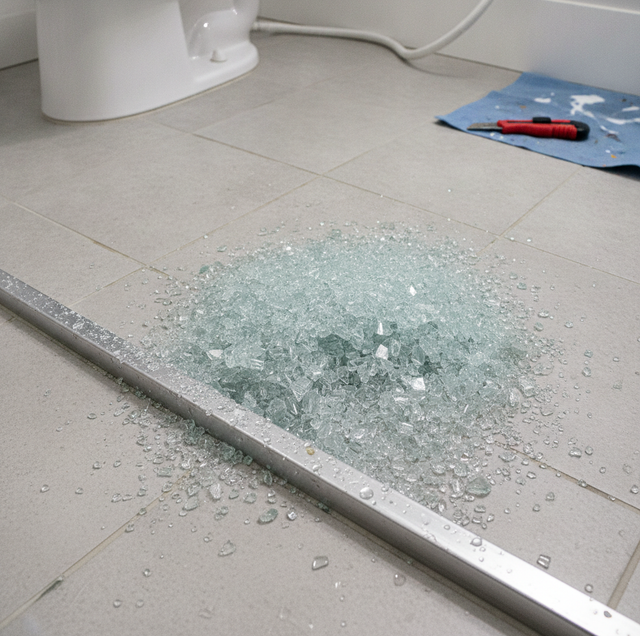
Most people never notice the glass around them until a pane breaks. When it does, the difference between the two main kinds of glass becomes very obvious, very fast. One kind falls apart into a pile of small, dull chunks that you can sweep up. The other splits into long, jagged blades that continue to hurt people long after impact. That difference is the whole reason tempered glass exists, and it explains where the building world quietly insists on it.
Tempered glass is often called safety glass, and the name is earned, not a marketing term. Understanding how it is made, what it can and cannot do, and where it belongs will help you recognize whether the glass in a risky spot in your home is the right kind or a hazard waiting for the wrong day.
Quick Answer: Tempered glass is regular glass that has been reheated and then cooled very quickly, which locks its surface into compression and its core into tension. That built-in stress makes it about four times stronger than ordinary glass, and when it finally does break, it crumbles into small, blunt pieces instead of sharp shards. Because of that behavior, it is generally required in and around doors, showers, and tubs, and any pane low enough or large enough that a person could fall or walk into it.
How Tempered Glass Is Made
Every sheet of window glass starts life as annealed glass. Annealing is the slow, controlled cooling of molten glass so that internal stresses relax and the pane remains flat and workable. Annealed glass is the ordinary glass most people picture, and it is perfectly fine in plenty of places. Its weakness shows up only when it breaks, because it breaks into long, sharp shards.
Tempering takes a finished piece of annealed glass and puts it through a second, very different heat cycle. The glass is carried into a furnace and heated to just below its softening point, somewhere in the range where the material is hot enough to change its internal behavior but not so hot that it slumps. Then it is rushed out and blasted with jets of cool air from both sides at once. This rapid cooling is called quenching.
The trick is in the timing. The outer surfaces of the glass cool and harden first, while the center is still hot and slightly fluid. As the core finally cools and tries to contract, the already-rigid surfaces resist it. The result is a permanent tug-of-war frozen into the pane: the two faces are compressed, and the core is stretched in tension. Glass is very good at resisting compression, so putting the surfaces under a constant squeeze means a crack has to overcome that pressure before it can even start. That is what makes a tempered pane roughly four times stronger than an annealed pane of the same thickness against impact and bending.
Why It Breaks the Way It Does
The strength is useful, but the breakage pattern is the real point. All that stored energy has to go somewhere. When a tempered pane finally fails, the balanced stress releases at once across the entire sheet, and the glass fractures into thousands of small, roughly cubic pieces with relatively blunt edges. You have almost certainly seen the aftermath: a car's side window that has turned into a sheet of glittering pebbles held loosely together, or a shower door that collapsed into a heap of gravel-like chunks.
Those small cubes are far less likely to cause the deep, slicing wounds that long annealed shards cause. That is the entire basis for the term safety glazing. It does not mean the glass will not break. It means that when it breaks, the way it comes apart is much less dangerous to a person nearby. That single behavioral difference is why codes and standards specify tempered glass in the areas where a body is most likely to meet the pane.
One caveat is worth stating plainly. Broken tempered glass is safer, not harmless. The little cubes still have edges, they can still nick skin, and a collapsing panel can drop a surprising amount of weight. Cleaning up a shattered tempered pane and replacing it is a job for someone with the right gloves, tools, and disposal setup, not a barefoot midnight sweep.
The Rule That Surprises Most Homeowners
Tempering comes with a hard limitation that catches people off guard: once glass has been tempered, it cannot be cut, drilled, ground, or notched. Not "should not." Cannot. The stress that gives the pane its strength runs through the whole sheet as a balanced system. Break the edge with a cutter or punch a hole through the middle, and you disrupt that balance so violently that the entire pane explodes into cubes on the spot.
This means every dimension must be finalized before the glass ever enters the furnace. The sheet is cut to its exact size, and any holes for handles, hinges, or hardware are drilled while it is still ordinary annealed glass. Only then does it go through tempering. There is no trimming a tempered panel by half an inch to make it fit an opening. If the measurements were wrong, the whole piece is scrap, and a new one has to be made from scratch. It is one of the main reasons careful measuring matters so much with glass work, and why fabrication runs on the old rule of measuring twice.
The same sensitivity appears along the edges throughout the life of the pane. A chip, a nick, or a deep scratch near the edge of a tempered panel concentrates all that locked-in stress at a single weak point. Sometimes the pane holds for years and then breaks on its own without anyone touching it, which is why installers treat edge damage on tempered glass as a real problem rather than a cosmetic one.
How to Tell What You Already Have
Because tempered glass is a safety product, manufacturers are required to mark it. Somewhere in a corner of the pane, you will usually find a small etched or sandblasted stamp, sometimes called a bug. It typically names the maker and references the safety standard the glass was made to meet. The mark is small and easy to overlook, often tucked into a corner behind a frame, but it is the fastest way to confirm a pane is tempered without breaking it.
If you check a pane in a clearly hazardous location, a shower door, a full-height sidelight next to an entry door, a low window beside a stair, and find no mark anywhere in the corners, that is worth flagging. It may be ordinary annealed glass sitting in a spot where safety glazing belongs, which is common in older homes and in some do-it-yourself repairs. A glass professional can confirm the type and advise whether it should be upgraded.
Where Safety Glass Is Generally Required
Building rules do not demand tempered glass everywhere. They target the places where people are most likely to strike, fall against, or walk into the glass. These are usually described as hazardous locations, and while the exact wording varies, the pattern is consistent. Safety glazing is generally called for:
- In and beside doors- Glass panels in doors themselves, plus the tall, narrow sidelights next to an entry door, sit right where hands, shoulders, and bodies pass through constantly.
- Around showers, tubs, and pools- Wet floors, moving bodies, and hard surfaces make bath and shower enclosures classic high-impact zones, so the glass there is expected to be safety glass.
- Low to the floor- A pane whose bottom edge sits close to the floor is easy to trip into or fall against, so large low panels are commonly required to be safety glass.
- Along stairs and landings- Glass beside a stairway or on a railing catches people who stumble, which is exactly the moment you do not want long shards.
- Large panes that people could walk into- A big, clear, low sheet of glass that reads as open space, next to a patio door, for instance, is a walk-through risk and is generally required to be safety glazing.
The theme running through all of these is simple: the higher the odds that a person meets the glass with force, the stronger the case for safety glazing. If you are unsure whether a specific pane in your home qualifies, that judgment is best left to a glazier who works with these requirements every day.
Tempered Is Not the Only Safety Option
Tempered glass is one of two common ways to satisfy safety-glazing requirements. The other is laminated glass. Laminated glass sandwiches a thin, tough plastic layer between two sheets of glass, bonding them together. When it breaks, the glass cracks, but the fragments stick to the plastic rather than falling free, which is why a windshield turns into a spiderweb yet holds its shape. Laminated glass is favored where you also want the pane to stay in the opening after breaking, such as overhead glazing, security applications, and sound control.
So it helps to keep the three main types straight:
- Annealed glass is ordinary glass. It can be cut, drilled, and reworked easily, but it breaks into long, sharp shards. It belongs in low-risk spots where no one is likely to hit it.
- Tempered glass is heat-strengthened for impact and crumbles into small, blunt cubes when it fails. It cannot be modified after tempering and is sensitive to edge damage. It is the workhorse of safety glazing.
- Laminated glass holds together when broken because of its plastic interlayer. It is the choice when the glass needs to stay in place after a break or block sound and forced entry.
Knowing which of the three you are looking at, and which one a given location calls for, is the difference between a pane that protects the people around it and one that becomes a hazard the day it finally gives way. When a risky pane is the wrong type, replacing it with the correct safety glazing is a simple call for a professional and well worth doing before an accident forces the issue.
Frequently Asked Questions
The strength comes from a built-in stress pattern created during manufacturing. The pane is heated close to its softening point and then cooled very rapidly with jets of air, which locks the two outer surfaces into compression while the center stays in tension. Fully tempered glass ends up roughly four times stronger than an annealed pane of the same thickness. There is also a distinct middle-grade, heat-strengthened glass, made with slower cooling, which leaves it about twice as strong as annealed glass; unlike tempered glass, it does not shatter into small cubes, so it is not treated as safety glazing on its own.
The label describes how it breaks rather than how strong it is. When a tempered pane fails, it fractures into many small, relatively blunt cubes rather than long, razor-sharp shards, which are far less likely to cause deep cuts. To be sold as safety glazing, a pane has to pass an impact test defined by published standards, most commonly CPSC 16 CFR 1201 and ANSI Z97.1, so "safety glass" is a performance rating a pane earns, not just a description of how it looks.
No. Once glass is tempered, it can only be surface-decorated or coated, never cut, drilled, or ground, so any attempt to size it after the fact makes the whole sheet shatter. Every dimension and every hole has to be finished while it is still annealed, and even edge-seaming (smoothing the raw edges) must be done before the furnace, because the balanced stress runs to the very edge afterward. A wrong measurement means a new piece, not a trim.
It is generally called for where a person is most likely to hit the glass with force, and the triggers are usually size and proximity cues rather than a single rule. In practice, that means large panes above a certain area, any glass within roughly a couple of feet of a door's edge, panes whose bottoms sit low to the floor, and wet areas like tubs and showers. The larger, lower, or closer to a doorway a pane is, the more likely it is to need to be safety glazing.
A tempered pane carries a lot of stored energy, and a weak point can release it later without any obvious trigger. A nick or chip along the edge, or a rare tiny impurity trapped inside the glass, concentrates that built-in stress at one spot, and over time, it can set off a spontaneous fracture. That is why installers do not shrug off edge damage on a tempered panel; a chip that looks cosmetic can be the reason a pane fails weeks or months later.
Look in the corners for a small etched or sandblasted mark, often called a bug, which names the manufacturer and the standard the glass meets. There is also a field tell besides the stamp: viewed through polarized sunglasses in daylight, a tempered pane often shows faint dark "strain marks" or spots left by the quenching jets, which annealed glass does not have. If a pane in a hazardous spot, such as a shower door or entry sidelight, has no corner mark and no strain pattern, it may be ordinary annealed glass that belongs on a replacement list.
Have a professional check the glass in your doors, showers, and low windows — and replace any faulty panes with proper safety glazing before someone gets hurt. Luxe Residential and Commercial Glass serves the Las Vegas Valley. Call (702) 825-7463.
