
Frameless Shower Door Glass Thickness: What You Need
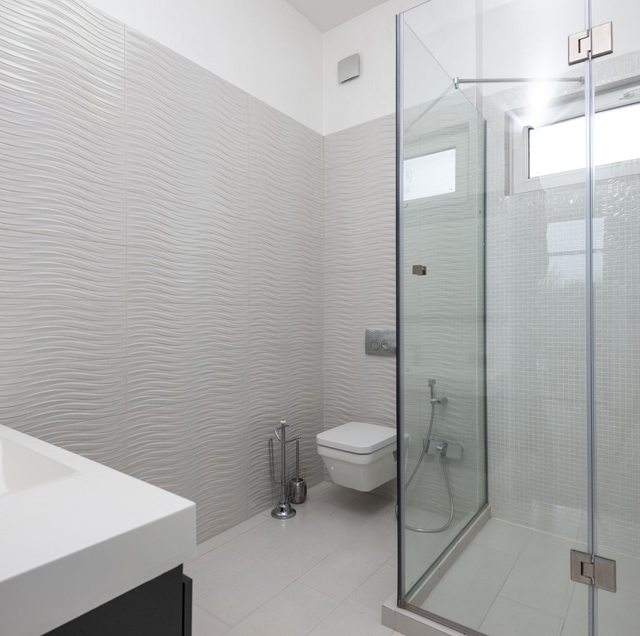
Quick Answer: Most frameless shower doors use 3/8-inch tempered glass, the standard for rigidity and everyday spans. Half-inch glass is the heaviest option for a solid feel and larger panels, while 5/16-inch suits smaller, lighter panels and shorter runs. All shower glass should be tempered safety glass.
A frameless shower door has no metal channel wrapped around its edges to keep it stiff and square. The glass itself does the whole job of staying flat, holding its shape, and carrying the weight of the door swing. That single fact drives every thickness decision that follows, so it helps to understand the "why" before the numbers.
Why Frameless Glass Has To Be Thicker
A framed shower door is a thinner sheet of glass held inside an aluminum surround on all four sides. The metal frame is the structure. It braces the panel, keeps it rigid, and hides the raw edges, so the glass inside can be relatively thin (often around 3/16 inch or 1/4 inch) and still feel stable because the frame is doing the stiffening work.
Pull the frame away, and the glass loses its brace. Now the panel has to resist flexing, twisting, and sagging entirely on its own. A thin sheet with no frame would bow when you push the door and wobble when it swings. The fix is mass: thicker glass is stiffer, holds a flat plane, and stays square across a tall span. That is the core trade of going frameless. You gain a clean, open, hardware-light look, and you pay for it with heavier, thicker glass and sturdier mounting.
Thickness in shower glass is usually given in inches, and the jump from one size to the next is not just a bigger number. Each step up adds noticeable weight and stiffness, which changes the hinges, the hardware, and how the wall behind the tile has to be prepared.
The Standard Frameless Options
Three thicknesses cover nearly all frameless work. They are not interchangeable, and the right one depends on panel size, door span, and how solid you want the door to feel in the hand.
3/8 Inch: The Common Choice: Three-eighths-inch glass is the workhorse of frameless showers and the option most homeowners end up with. It is thick enough to stand rigid without a frame, handles a normal-size door and return panel comfortably, and swings with a reassuring stiffness. It also tends to be the most versatile of the true frameless thicknesses, easy to hang on standard hinges and hardware, which is part of why it is so common. For a typical single door with a fixed panel, 3/8 inch is usually the default recommendation.
1/2 Inch: The Premium Feel: Half-inch glass is the heaviest and most substantial of the usual options. It has the most solid, vault-like feel when you open and close it, and it holds a flat plane across wider and taller panels where thinner glass might start to flex. That heft comes with requirements. Half-inch panels are heavy, so they need stronger hinges and heavier-duty hardware rated for the load, and the wall behind the mounting points has to be properly backed to carry the weight. It is the premium pick for large enclosures, oversized doors, and anyone who wants the glass to feel as heavy and expensive as it looks.
5/16 Inch: The Lighter Middle: Five-sixteenths-inch glass sits between framed thinness and full frameless heft. It is lighter and easier to handle than 3/8 inch and works well for smaller panels, short fixed screens, and lighter door configurations where the full weight of 3/8 or 1/2 inch is not needed. It is less common than 3/8 inch and is best matched to modest spans rather than tall, wide statement enclosures. Think of it as the efficient option for a compact layout rather than a downgrade.
Every Option Must Be Tempered
Whatever thickness you pick, the glass must be tempered. Tempered glass is heat-treated safety glass, and it behaves very differently from ordinary annealed glass if it ever fails. Instead of breaking into long, knife-like shards, it fractures into a mass of small, blunt, pebble-like pieces that are far less likely to cause a serious cut. In a wet room where people are barefoot and moving around, that behavior is the whole point.
You can usually confirm a panel is tempered by finding the small etched or sandblasted stamp in one corner, often called the bug or mark, which names the maker and the safety standard. If you cannot find that stamp, treat the glass as unverified and have it checked before it goes in.
Tempered glass is very strong across its face but sensitive at its edges. A chip or a nick in the edge can, in rare cases, lead to a spontaneous break days or even weeks later as internal stress finds the flaw. These panels should be handled and set by people who do it for a living, not muscled into place on a whim.
How Thickness Changes The Hardware And The Wall
Thickness is not only about the glass. It sets the spec for everything the glass touches.
Hinges and clamps are cut and rated for a specific glass thickness, so 3/8-inch hardware and 1/2-inch hardware are not the same parts. Heavier glass needs hinges engineered to carry more weight and hold alignment over years of daily swinging, and the door has to be balanced so it neither drifts open nor slams shut.
The wall matters just as much. A loaded frameless panel puts real prying force on its mounting points, and those anchors cannot rely on tile and drywall alone. Tile is a finish, not structure, and a screw set only into drywall will eventually work loose under a heavy swinging door. The mount needs to reach solid wood: the studs behind the wall, or blocking added between the studs during the build specifically to catch the hardware. Under-anchoring a heavy panel is a genuine safety hazard, because a door that pulls free can fall and shatter. This is one of the strongest reasons professional measuring and installation matter, since the installer has to locate or add that backing before the glass ever hangs.
Weight also shapes the door swing and the daily experience. Heavier glass swings with more authority and settles more firmly, but it demands that everything upstream, from hinge to anchor to backing, is sized to match. Get the chain right, and the door feels effortless. Get one link wrong, and a beautiful panel becomes a nagging problem.
Panel Size And Span Point You To A Thickness
The single biggest driver of thickness is how large a piece of glass you are asking to stand on its own. A small return panel and a modest door can live happily on thinner glass. A tall, wide fixed panel or an oversized single door has more unsupported area, more prying force, and more tendency to flex, so it wants more thickness to stay flat and stable.
Height plays into this too. A taller panel has a longer lever arm, which magnifies any flex, so tall enclosures lean toward 3/8 or 1/2 inch. Where a design carries a lot of glass across a long opening, a header or brace across the top can add support and let a given thickness span farther, which is one way large layouts stay rigid. The reach of a swinging door also feeds the decision, since a wide door hangs more weight off its hinges the farther it opens.
The practical read is simple. Small and light points toward 5/16 inch, standard points toward 3/8 inch, and large, tall, or heavy-duty points toward 1/2 inch. A good installer matches the thickness to the actual dimensions of your opening rather than defaulting to one size for everything.
Coatings, Etching, And What Thickness Will Not Fix
A common misunderstanding is that thicker glass resists water spots and cloudiness better. It does not. Hard-water etching is a surface chemistry problem, not a thickness problem. Mineral-laden water dries on the glass, leaves deposits, and over time can etch faint cloudy marks into the surface. A half-inch panel etches just as readily as a thinner one, because the etching happens on the face, not through the body.
The real defense against hard-water etching is a protective coating. Many frameless panels can be treated with a clear hydrophobic sealant that makes the surface slicker, so water beads and sheets off instead of clinging and drying in place. It does not make the glass maintenance-free, but it makes routine squeegeeing far more effective and slows the buildup that leads to etching. Choose thickness for structure and feel; choose a coating for keeping the glass clear.
Matching Thickness To The Space
Once the safety and structural basics are covered, the choice comes down to the look and feel you want and the size of the opening, kept in that order. Weight climbs with thickness, and heavier glass needs sturdier hinges and firmer wall anchoring, so 1/2 inch sits at the top for heft and span, 3/8 inch in the middle for everyday openings, and 5/16 inch at the light end for compact panels. None of the three is a lesser panel; they are all real frameless glass, just sized to different jobs.
For most homeowners, 3/8 inch is the balanced answer: rigid, handsome, and sensible. Step up to 1/2 inch when the enclosure is large, or you specifically want that heavy, high-end feel and are ready for the hardware and wall backing it requires. Drop to 5/16 inch when the panels are small, and you want to trim weight and hardware load without going framed. The best decision comes from measuring the actual opening, confirming the wall can be anchored properly, and matching all of it to how you want the finished shower to look and feel.
Frequently Asked Questions
Can I switch from a framed door to frameless without changing my walls?
Not always. Framed doors often anchor into the frame's own channel, which spreads load and forgives a weaker wall. Going frameless usually means new anchor points that must hit studs or added blocking, and if your existing wall lacks backing where the new hardware lands, the installer may need to open the wall or relocate mounts. It is worth confirming before you commit to the switch.
Does thicker glass make a shower door quieter or is it just heavier?
Both, to a degree. Beyond the added weight, thicker glass has more mass to dampen vibration, so it tends to swing with less rattle and closes with a lower, more muffled sound rather than a thin sharp click. Soft-close or hydraulic hinges do more for quietness than thickness alone, but the heavier panel does contribute a steadier, more solid acoustic.
How much does 1/2-inch shower glass actually weigh?
Half-inch tempered glass runs roughly 6.5 pounds per square foot, so a single door panel can weigh well over a hundred pounds. Three-eighths-inch glass is closer to 5 pounds per square foot. That difference is exactly why 1/2 inch demands beefier hinges and confirmed wall blocking rather than the same hardware you would use on a lighter panel.
Is low-iron glass worth it, and does it change the thickness I need?
Low-iron glass removes the faint green tint that standard glass shows on its edges, giving a clearer, more true-to-color look, which is popular on thicker panels where the edge is more visible. It is a purity choice, not a strength choice, so it does not change the thickness your span requires. You pick the thickness for structure and separately decide whether you want low-iron for clarity.
What edge finish should frameless glass have and why does it matter?
Frameless edges are exposed, so they are typically given a polished or flat-polished finish rather than a raw or seamed edge. Beyond looks, a smooth polished edge removes the tiny nicks that can seed a spontaneous break in tempered glass. A clean, well-finished edge is both a safety feature and a sign the fabricator handled the panel carefully.
Can I drill or modify tempered glass after it is installed?
No. Tempered glass cannot be cut, drilled, or notched after tempering; any attempt will shatter the entire panel because the surface tension releases at once. Every hole, cutout, and hinge notch is made in the annealed sheet before it goes through the tempering oven. If a panel needs a new opening later, it has to be remade from scratch, which is why accurate measuring up front is so important.
Book a free in-home measure and glass consultation — get the right thickness and hardware matched to your exact opening. Luxe Glass serves Las Vegas, Henderson, and the greater Las Vegas Valley. Call (702) 825-7463.
