Do Protective Coatings on Shower Glass Actually Work?
Quick Answer: Yes, protective coatings on shower glass do work — they create a smooth, water-repellent barrier on the glass that resists the mineral and soap buildup that causes cloudiness and spots, making the glass easier to clean and helping it stay clear longer. They work by sealing the microscopically porous glass surface so water beads up and rolls off rather than depositing minerals. The realistic expectation is that coatings reduce buildup and cleaning effort and slow cloudiness, not that they make the glass maintenance-free forever — coatings wear over time and need periodic reapplication, and you still squeegee and clean. In hard-water areas especially, a coating is a worthwhile tool for keeping shower glass clear.
If you've battled cloudy, spotty shower glass, you've probably wondered whether the protective coatings glass companies offer are worth it, or just an upsell. The honest answer is that they do work — but it helps to understand how they work and what to realistically expect, so you know what you're getting. Here's the real story on shower glass coatings, especially in a hard-water area where keeping glass clear is a constant challenge.
How Protective Coatings Work
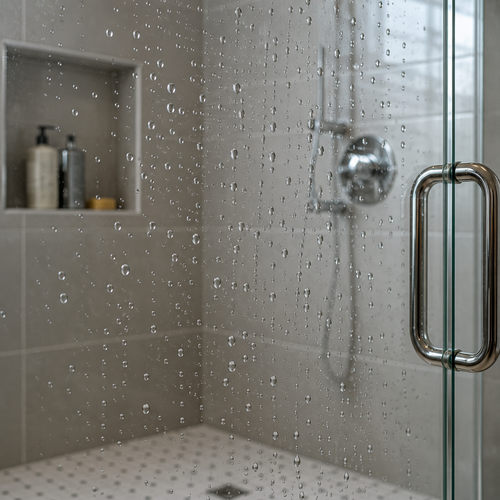
The reason shower glass gets cloudy and spotty is that hard-water minerals and soap scum deposit on the glass and cling to it, and the glass surface is microscopically porous, which gives those deposits places to grab hold. Protective coatings address this directly: they create a smooth, sealed, water-repellent barrier over the glass. By sealing the tiny pores and making the surface slick and hydrophobic (water-repelling), the coating causes water to bead up and roll off the glass rather than spreading out and drying into mineral deposits. With less water lingering and fewer places for minerals and soap to adhere, buildup forms more slowly and wipes away more easily. So the coating works by changing how water and deposits interact with the glass surface.
What They Actually Do for You
In practical terms, a protective coating delivers a few real benefits. The glass resists mineral and soap buildup, so it stays clearer longer between cleanings. When buildup does occur, it's easier to clean off because it adheres less strongly to the treated surface. And because water beads and runs off, you get fewer spots and less cloudiness in the first place. The overall effect is shower glass that stays looking good with less effort and slows the path toward the heavy buildup and etching that plague untreated glass. For anyone tired of constantly scrubbing cloudy glass, that reduction in buildup and cleaning effort is the real value of a coating.
| What a coating does | Benefit |
|---|---|
| Seals the porous glass surface | Fewer places for deposits to grab |
| Makes glass water-repellent | Water beads and rolls off |
| Resists mineral and soap buildup | Glass stays clearer longer |
| Reduces adhesion of deposits | Easier to clean |
| Slows cloudiness and spotting | Less scrubbing, slower etching |
Setting Realistic Expectations
It's important to be realistic about what coatings do and don't do. A coating is not a permanent, maintenance-free solution — it doesn't mean you'll never have to clean the glass again. What it does is reduce buildup, make cleaning easier, and help the glass stay clear longer. You still squeegee after showers and clean periodically; the coating just makes those efforts more effective and less frequent. Coatings also wear over time with use and cleaning, so they need periodic reapplication to keep working. So the right expectation is a meaningful improvement in how easily the glass stays clear, not a one-time treatment that eliminates maintenance forever. Understood that way, coatings genuinely deliver.
Are They Worth It in Hard Water?
In a hard-water area, where mineral buildup forms quickly and aggressively, a protective coating is especially worthwhile. Hard water is exactly the condition that causes the most cloudiness, spotting, and eventual etching, so a coating that resists buildup and makes cleaning easier addresses the core problem. It helps slow the progression toward etched, permanently cloudy glass, which is the worst outcome. Combined with squeegeeing and regular cleaning, a coating is a valuable part of keeping shower glass clear in hard water, rather than fighting a constant losing battle against deposits. For homeowners in hard-water regions, coatings make a practical investment in protecting and maintaining their glass. There's also a longer-term payoff worth keeping in mind: by slowing buildup, a coating helps put off the day when glass becomes etched and permanently cloudy — the point at which cleaning no longer helps, and replacement is the only fix. Protecting the glass before that happens is far easier than dealing with it after, which is part of what makes a coating sensible in conditions that are hard on glass.
Get the most from a coating by pairing it with good habits. Squeegeeing after each shower works even better on coated glass — the water beads and sheets off easily — and it keeps the coating working longer. A coating plus a quick squeegee is a powerful combination for keeping shower glass clear with minimal effort.
Frequently Asked Questions
Yes. They create a smooth, water-repellent barrier on the glass that resists the mineral and soap buildup causing cloudiness and spots, making the glass easier to clean and helping it stay clear longer. They work by sealing the porous glass surface so water beads up and rolls off rather than depositing minerals. The realistic benefit is reduced buildup and cleaning effort, not a maintenance-free surface forever.
Glass is microscopically porous, giving minerals and soap places to adhere. A protective coating seals that surface and makes it slick and water-repellent, so water beads up and rolls off instead of spreading and drying into deposits. With less water lingering and fewer places for buildup to grab, mineral and soap buildup forms more slowly and wipes away more easily, keeping the glass clearer.
No. A coating isn't permanent or maintenance-free — it reduces buildup, makes cleaning easier, and helps the glass stay clear longer, but you still squeegee and clean periodically. Coatings also wear over time with use and cleaning, and need periodic reapplication to keep working. The right expectation is a meaningful, ongoing improvement in keeping the glass clear, not a one-time treatment that eliminates maintenance.
No. You'll still clean the glass and benefit from squeegeeing after showers, but the coating makes those efforts more effective and less frequent by resisting buildup and making deposits easier to remove. So you clean less often and with less scrubbing, but not never. The coating reduces the maintenance burden rather than eliminating it entirely.
Especially so. Hard water causes the most cloudiness, spotting, and eventual etching, so a coating that resists buildup and eases cleaning addresses the core problem and helps slow the progression toward permanently etched glass. Combined with squeegeeing and regular cleaning, a coating is a valuable tool for keeping shower glass clear in hard water, making it a practical investment in hard-water regions.
It varies, since coatings wear over time with use and cleaning, so they need periodic reapplication to keep performing. The exact lifespan depends on the coating, usage, and how the glass is cleaned. The key point is that a coating is an ongoing treatment that's renewed periodically rather than a one-time permanent application. A glass professional can advise on the coating and reapplication for your situation.
Protective coatings on shower glass do work: by sealing the porous glass and making it water-repellent, they resist the mineral and soap buildup that causes cloudiness, keep the glass clearer longer, and make it easier to clean. The realistic expectation is reduced buildup and cleaning effort, not a maintenance-free surface — coatings wear out and need reapplication, and you still must squeegee. In hard water, especially, a coating is a worthwhile tool for keeping your shower glass clear.
Want your shower glass to stay clear longer in hard water? — Get it treated with a protective coating that resists buildup. Luxe Residential and Commercial Glass serves the Las Vegas Valley. Call (702) 825-7463.
