
What Is an Insulated Glass Unit? The IGU Explained Simply
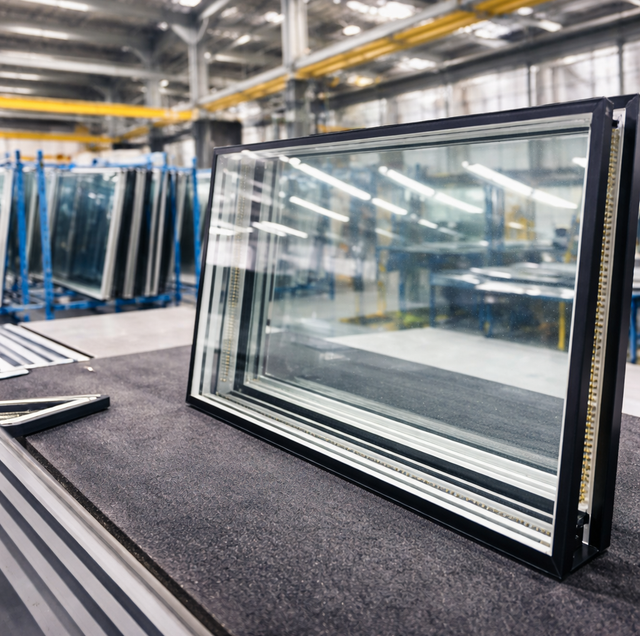
Quick Answer: An insulated glass unit is two or three panes of glass separated by a spacer bar and bonded with an edge seal, with the space between filled by dry air or argon/krypton gas. The trapped gas slows heat transfer, and low-e coatings reduce radiant heat. When the perimeter seal fails, moisture gets inside and permanently fogs the gap, which is why a failed IGU is replaced as a sealed unit.
An insulated glass unit, usually shortened to IGU, is the piece of glass doing the real work behind the word "double-pane." It is not one thick sheet of glass. It is two (sometimes three) separate panes held a fixed distance apart, sealed together around the edges into a single sandwich, with a still layer of dry air or inert gas trapped in the gap between them. That sealed gap is the whole point. Understanding how the unit is built makes it much easier to see why it performs the way it does, and why a certain kind of failure means the glass gets swapped rather than the entire window.
How an Insulated Glass Unit Is Built
Picture the construction from the edge inward, because the edge is where everything is decided. Around the perimeter of the two panes sits a spacer bar, a thin hollow rail that holds the panes a set distance apart, commonly around a half-inch. The spacer defines the width of the air gap, and that gap width is tuned deliberately: too narrow, and there is little insulating benefit; too wide, and the gas can start to circulate and carry heat across instead of sitting still.
Inside that hollow spacer is a desiccant, a drying agent much like the silica packets tucked into a shoebox. It absorbs any trace moisture sealed inside the unit during manufacturing so the gap stays clear. Then the whole perimeter is bonded with a sealant, often a two-part structural sealant, that glues the panes to the spacer and blocks outside humidity from ever reaching the gap. Two panes, one spacer, a hidden desiccant, and a continuous edge seal. That is the entire unit, and each part has a job.
Why the parts have to work together: The seal keeps moisture out. The desiccant mops up whatever was trapped during assembly. The spacer holds the geometry steady so the panes do not bow together and touch. Remove any one of those and the unit stops behaving like an insulator. That interdependence is why an IGU is treated as a single sealed component, not a stack of parts you can service one at a time.
How the Sealed Gap Actually Insulates
Heat crosses a window three ways: by conduction through solid material, by convection as air moves, and by radiation as infrared energy. A single sheet of glass fights none of them well. The IGU targets all three.
The trapped gas layer is the star. Still, gas is a poor conductor, so heat struggles to pass straight through it. Because the gap is sized to keep that gas from circulating, convection is limited too, and the layer sits there as a buffer. Swapping ordinary air for a denser inert gas such as argon or krypton slows conduction further, since heavier, slower-moving gas molecules pass energy along less readily than air does.
Radiation is handled separately by a low-e coating, a microscopically thin metallic layer applied to one of the interior glass surfaces. It reflects infrared energy back toward its source. That reflection works in both directions, which is what makes an IGU an evergreen upgrade rather than a seasonal one. In hot weather, it reflects much of the sun's radiant heat back before it loads up your rooms, and in cold weather, it keeps the warmth your heating system produces from radiating out through the glass. The unit is not "for summer" or "for winter." It slows heat from crossing in whichever direction it is trying to go.
One coating, several recipes: Low-e coatings are tuned by the manufacturer for different priorities, some to block more solar heat, others to hold more interior warmth while still letting visible light through. Glass makers publish those performance figures, and they are worth reading as manufacturer specifications rather than guarantees, since real-world results depend on orientation, shading, and how the whole opening is installed.
Why the Edge Seal Is the Weak Point
Every strength of an IGU depends on the gap staying dry and sealed. So the failure mode that matters most is a seal breach. Seals are asked to flex through years of daily heating and cooling; the glass expands under the sun and contracts at night, the gas inside pressurizes and relaxes, and the sealant works through that cycle over and over. Constant thermal swings and high solar load speed that fatigue along. Eventually a seal can crack or pull loose.
Once the seal lets go, two things happen. The inert gas, if the unit had any, slowly diffuses out, so the insulating value drops back toward that of plain double glazing. More visibly, humid outside air seeps in. The desiccant absorbs that moisture until it is saturated, and after that, water vapor condenses inside the gap on cool mornings. That is the telltale haze or film sitting between the panes, on surfaces you cannot reach.
You can scrub both outer faces of the glass spotless, and the cloudiness between the panes remains, because it lives on interior surfaces the cloth never reaches. That kind of fog is the sign of a failed seal, not dirt.
Fogged Between the Panes Means the Seal Failed
When condensation shows up between the panes, it is not a dirt problem and not a coating problem. It is a seal problem, and the two are almost always linked: the fog is the symptom, the failed perimeter seal is the cause. That distinction changes the repair.
Because the panes, spacer, desiccant, and seal are bonded into one sealed component, the standard fix is to replace the insulated glass unit itself, not the whole window. The frame, sash, and hardware usually stay in place; a glass professional measures the failed unit and fits a new sealed one into the existing opening. You may see products or online tips that promise to drill and vent a foggy unit to dry it out. Those are stopgaps at best. Drilling breaches the very seal that is supposed to keep humidity out, so the gap can re-fog, and any gas fill and reliable insulating value are gone for good. Treat a fogged IGU as a sealed-unit replacement and leave the cutting and fitting to a pro, both for the result and because handling large glass is a laceration risk if a pane cracks.
How an IGU Differs From Other Glass
It helps to separate two different jobs that glass can do: insulating and protecting. An IGU is built for insulation. Tempered and laminated glass are built for safety. They are not competing choices so much as answers to different questions, and a single opening can call for both at once.
Single-pane, insulated, and safety glass compared: Single-pane glass is one sheet with no sealed gap. It lets heat pass almost freely, which is why older single-pane windows feel cold in winter and hot near the sun. There is nothing to fog between panes because there are no panes to fog between.
An insulated glass unit adds the sealed gap and, usually, a low-e coating to cut heat flow both ways. Its job is comfort and energy performance, not impact resistance.
Tempered glass is heat-treated so it is much stronger and, when it does break, crumbles into small blunt pieces instead of long shards. Laminated glass bonds a plastic interlayer between two panes so a break stays stuck to the film rather than falling out.
Safety glazing matters here because certain locations, doors, sidelites, low windows near the floor, and glass in wet areas like showers and tubs may require tempered or laminated glass under local building rules. Those requirements vary by jurisdiction and change over time, so verify what applies to your specific opening locally. The useful point is that an IGU and safety glass are not either-or: a patio door can be a double-pane insulated unit whose panes are also tempered, doing both jobs in one assembly.
How an IGU Ties to Energy Performance
The number that captures an IGU's insulating ability is the U-factor, which measures how readily heat passes through the whole assembly. A lower U-factor means less heat crosses, so a well-built insulated unit with a low-e coating and a gas fill carries a lower U-factor than plain single glazing. It is the reverse of R-value, the insulation rating people know from attics: with U-factor, smaller is better.
That single figure quietly reflects everything covered above. The sealed gas layer, the low-e coating, the spacer, and an intact seal all feed into it. When a seal fails and the gas escapes, the real-world U-factor of that opening drifts upward toward single-pane territory even though the window still looks like a double-pane from across the room. The performance you paid for lives inside a seal you cannot see, which is exactly why the edge is the part worth caring about.
Frequently Asked Questions
Yes. A triple-pane IGU uses three sheets of glass and two separate sealed gaps, giving two insulating gas layers instead of one. It lowers the U-factor further and can dampen outside noise a little more, at the cost of extra weight and thickness. Triple units place more load on the sash and hinges, so the frame and hardware have to be rated for the added weight rather than assumed to carry it.
There is no reliable way to eyeball it, since argon is colorless. The gas fill is listed on the manufacturer's spec sheet or on a label etched into the spacer or a corner of the glass at the factory. Some installers use a handheld device that reads the fill percentage without opening the unit. Argon also diffuses out very slowly through an intact seal over many years, so an older unit may hold somewhat less than it did the day it was made, even without any obvious failure.
No. A crack in either pane breaks the seal path and lets the gap communicate with outside air, so the sealed unit is compromised even if only one of the two panes is cracked. Unlike a windshield chip, there is no resin fill that restores a sealed IGU. The unit is replaced as a whole, though the surrounding frame and sash typically stay put.
Condensation on the outermost surface, the face you can wipe, is usually a sign the window is working well, not failing. An efficient low-e unit keeps the outer pane cooler because it is not bleeding interior heat outward, so dew forms on it on cool mornings much as it forms on a car roof. It clears as the day warms. Fog you cannot wipe, sitting between the panes, is the failure case; wipeable fog on an outer face generally is not.
It does, at the edges. Older units used aluminum spacers, which conduct heat readily and can create a cold band around the glass perimeter where condensation and slight heat loss concentrate. Newer "warm-edge" spacers use less-conductive materials such as stainless steel, structural foam, or composites to soften that edge effect. The center of the glass may read the same either way, but the warm-edge version resists edge condensation and edge heat loss better.
Seal life varies widely with build quality, installation, and how much thermal stress the unit sees, but many quality units run well over a decade, and often closer to two, before any seal issue appears. Units that sit in constant direct sun, or that were installed so water pools at the bottom edge, tend to fail sooner because heat and standing moisture both attack the sealant. A unit that fogs within a few years of installation often points to an installation or manufacturing flaw rather than normal aging.
Get a fogged or failing insulated glass unit measured and replaced — restore the clear view and the insulation you paid for. Luxe Residential and Commercial Glass serves the Las Vegas Valley. Call (702) 825-7463.
