
Sliding Glass Door Hard to Slide? 6 Fixes That Work
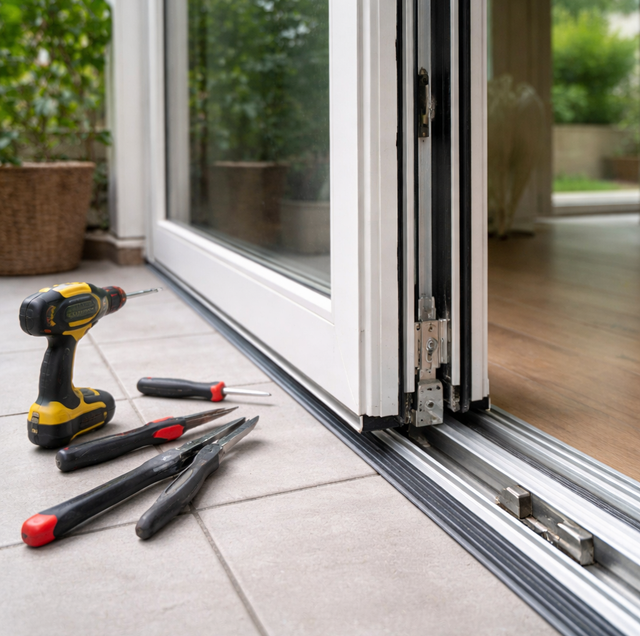
Quick Answer: A sliding glass door drags because the rollers or the track have stopped moving cleanly. The usual culprits are grit packed into the bottom track, worn or flat-spotted rollers, a bent or corroded track, roller-height screws set wrong, a door sagged out of square, or a dirty top guide. Cleaning the track, wiping the rollers, and adjusting roller height are homeowner-safe. Lifting the panel out to change rollers or straighten a track is a two-person or professional job because the glass is heavy and can break.
A patio door that once glided with a fingertip now takes a shoulder and a grunt. It stutters halfway, grinds, or lurches over an invisible bump and then jams. You are not imagining the difference. A sliding glass door is a heavy panel balanced on tiny wheels riding a metal channel, and it works only while those two parts stay clean and true. When drag creeps in, one of a handful of specific things has gone wrong, and naming which one tells you whether it is a five-minute cleaning or a job for a second set of hands.
How the Door, Rollers, and Track Work Together
The panel that slides does not touch the floor. It hangs its weight on two small wheels, called rollers, mounted inside the bottom rail of the door. Those rollers ride along a raised metal ridge in the bottom track, the channel built into the door frame. At the top, a shallow guide keeps the panel from tipping in or out but carries almost no weight. So the entire door, often 80 to well over 150 pounds of glass and metal, balances on two contact points the size of a coin.
That design is why the door feels effortless when everything is right and miserable when one small thing is off. The rollers only need to spin freely, and the track only needs to stay smooth and straight. Interrupt either, and the panel stops rolling and starts scraping. Most drag is the panel dragging instead of rolling, so the fix is almost always about restoring a clean roll rather than forcing the door harder.
The Common Reasons a Sliding Door Starts to Drag
Once you know the door rides on rollers along a track, the causes sort into a short list. Work down it in order, because the simplest and most common problems sit at the top.
Packed dirt and grit in the track: The bottom track collects everything the frame catches: dust, pet hair, sand off shoes, dead leaves, crumbs. Over months it compacts into a hard ridge the rollers have to climb over. This is the single most common reason a door that slid fine last year drags now, and it often masquerades as a "broken" door when nothing is actually broken.
Worn or seized rollers: Rollers wear out. A nylon or steel wheel that has spun for years can develop a flat spot, lose its bearing, or seize entirely so it skids instead of turning. A seized roller drags the whole panel across the track like a sled, which chews up the track surface and speeds the damage.
A bent or corroded track: The raised ridge the rollers ride can get dented by a dropped object, kinked when something heavy leans on the open door, or pitted by corrosion where moisture sits. A rough or bent ridge stops the roller cold at the same spot every time, which is a useful clue: consistent catching at one point usually means a damaged track, while drag along the whole run points to grit or rollers.
Roller-height screws set wrong: Most rollers sit on an adjustment screw that raises or lowers the wheel to level the door in its opening. If that screw has vibrated loose or was set too low, the door rides hard on the track edge or scrapes the frame. Too high, and the panel wobbles and jumps the guide. The screws hide behind small plugs or holes at the bottom corners of the door.
A sagging or racked door: A panel that has dropped out of square, sometimes called racked, no longer meets its frame evenly. You will see it in an uneven gap along the latch side, a door that seals at the top but not the bottom, or a panel that only drags in one direction. Racking overloads one roller and often points back to a roller or height problem underneath.
A dirty or worn top guide: The top guide is easy to forget because it carries no weight, but if it clogs with paint, debris, or a broken guide block, it pinches the top of the panel and adds friction the whole way across. A door that drags without any obvious problem in the bottom track sometimes has all its trouble up top.
Distinguishing a Track Problem From a Lock Problem
Before you clean anything, make sure you are chasing the right fault. A rolling problem and a latching problem feel similar from the handle but need opposite fixes.
A track or roller problem shows up while the door is moving: it drags, grinds, or catches partway across, and feels heavy the entire time you push. A lock or latch problem shows up only at the very end of travel, when the door reaches the jamb. If the panel slides freely right up to the closed position and then refuses to catch or will not stay latched, the mortise lock or the strike plate is misaligned, not the rollers. Sort which one you have before you start cleaning.
Fixes You Can Safely Try Yourself
Several common causes clear up with tools already in the house. None require removing the panel, which is the line between a homeowner job and a professional one.
Vacuum and scrub the track: Slide the door fully open and vacuum the whole channel, then work a stiff nylon brush or an old toothbrush into the corners where grit compacts hardest. A putty knife wrapped in a rag lifts the packed ridge along the roller path. Finish with a damp cloth and let it dry. This alone fixes a large share of dragging doors, so always start here.
Wipe the rollers and top guide: With the door open, reach the exposed faces of the rollers at the bottom corners and wipe off the gray paste of dirt and old lubricant that gums up the wheel. Clean the top guide channel the same way. A wheel that would not turn under grime often frees up once it is clean.
Once the track and rollers are clean and dry, use a dry silicone spray rather than household oil, grease, or petroleum spray. Those stay tacky and attract the dust and grit that caused the problem, while silicone leaves a slick, dry film that dirt does not cling to.
Adjust the roller height a little: Find the adjustment screws behind the plugs at the bottom corners of the door. Turn one a quarter turn at a time and test the slide after each small move, adjusting both sides until the door rides level and rolls freely without scraping. Go gently: a few small turns are the whole adjustment, and over-cranking the screw can pop the roller off its track or bind it harder.
Signs the Rollers or Track Need Replacing
Cleaning and adjusting solve most drag, but some doors are past a tune-up. A few signs tell you the parts themselves are worn out rather than dirty.
The door still drags after a thorough cleaning and a fresh silicone treatment, so the friction is in the hardware, not the debris. The rollers feel gritty, wobbly, or locked when you spin them by hand, or a flat spot is visibly worn into the wheel. The track ridge is dented, kinked, or pitted where the door always catches, since a damaged track will keep stopping a brand-new roller. Adjusting the height screws does nothing, or the screws spin without lifting the door, meaning the roller assembly has failed inside. Any of these means new rollers, a track repair or track cap, or both, and that work involves getting the panel out.
Why Lifting the Door Out Is a Two-Person or Pro Job
Changing rollers or repairing a track means lifting the glass panel off its ridge and tilting it out of the frame. This is where the job stops being casual. A patio panel is a large sheet of tempered glass in a heavy frame, often more than 100 pounds and awkward to hold, and it has to be lifted straight up and angled out without twisting.
If the glass itself is already cracked, chipped, or has a damaged edge, do not maneuver it at all, since a compromised panel is far more likely to fail under handling. That is the point to call a professional who has suction lifts, replacement rollers matched to your door, and a second person to control the weight.
Handled wrong, the panel can slip and land on a foot, wrench a back, or flex and shatter. Tempered glass does not crack politely; it bursts into a spray of blunt fragments all at once. Wear gloves, never attempt the lift alone, and keep children and pets clear.
Keeping the Door Sliding Smoothly
Prevention is mostly about keeping the two moving parts clean, and it takes minutes.
Vacuum the bottom track every month or two, more often with pets or heavy foot traffic, so grit never compacts. Re-apply dry silicone lubricant a couple of times a year, and always after a deep cleaning. Wipe the rollers and top guide whenever you clean the track, and avoid slamming the door, which hammers the rollers and can knock the height screws loose. Seasons cut both ways: blown-in grit and pollen load the track in the drier stretches, while damp spells leave moisture in the channel and start corrosion, so a quick clean is worth doing across the year rather than once. Catch a small drag early, and you rarely reach the point of replacing rollers at all.
Frequently Asked Questions
How much weight does a sliding patio door actually put on each roller?
A standard residential panel runs roughly 5 to 8 feet wide, and its full weight, commonly 80 to over 150 pounds depending on glass thickness and whether it is dual-pane, rests on just two rollers. That means each wheel can carry 40 to 80 pounds or more on a contact patch smaller than a thumbnail, which is why even a small flat spot or a fleck of grit under one roller creates drag far out of proportion to its size.
Are tandem rollers better than single rollers for a heavy door?
Tandem rollers pair two small wheels on one bracket per corner, spreading the load across four contact points instead of two, and are the standard upgrade for heavier or dual-pane panels. If your door has single rollers and has always felt heavy, switching to tandem assemblies during a roller replacement can noticeably ease the slide, since each wheel then carries about half the load and rides over minor track imperfections more easily.
Can I add a stainless steel track cap instead of replacing the whole track?
Yes. When the aluminum ridge is worn or lightly pitted, but the frame is otherwise sound, a stainless steel track cap, a thin metal cover crimped or adhered over the existing ridge, gives the rollers a fresh hard surface to ride on without cutting the door frame out of the wall. It is a common repair for an older door whose track is grooved from years of a seized roller, and it costs far less disruption than a frame replacement.
Why does my door slide fine in cool weather but stick when it is warm?
Aluminum and vinyl frame components expand as temperature rises, and a frame that is already tight can pinch the panel slightly more once it has warmed and grown, adding friction that disappears when it cools and contracts. If the drag tracks the time of day or the temperature rather than the amount of dirt, thermal expansion in a marginally-adjusted door is the likely cause, and lowering the roller height a hair to add clearance usually solves it.
Should I use candle wax or a bar of soap on the track as people suggest?
Skip both. Wax and soap seem to help for a day because they fill low spots, but they harden, flake, and then trap dust into a gummy paste that makes the drag worse within a week. A dry PTFE or silicone lubricant is the right product because it bonds a slick film to the metal and repels the grit that soap and wax actively collect.
Is a foot-operated door that lifts as it opens a different mechanism?
Some patio doors use a lift-and-slide system, where turning the handle raises the whole panel off a gasket onto its rollers before it moves and drops it back to seal when closed. If yours works that way and it has gone stiff, the problem is often in the lifting linkage or the handle gearbox rather than the rollers or track, so the cleaning and height-adjustment steps for a standard roller door will not apply, and it needs a look at the lift hardware itself.
Stop wrestling a door that should glide — a quick roller and track service can bring back the effortless slide. Luxe Residential and Commercial Glass serves the Las Vegas Valley. Call (702) 825-7463.
