
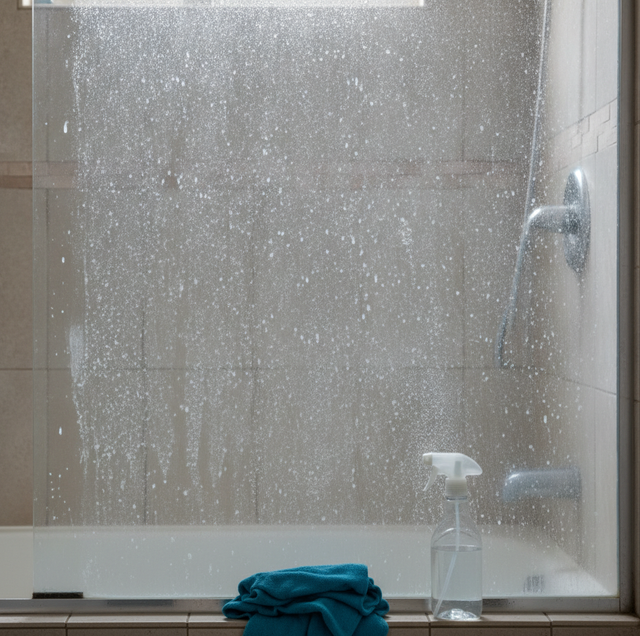
Your shower glass has gone cloudy and spotted, and every time you attack it with a scrubby pad, it looks a little better and a little more scratched. There is a real fear here that you could permanently damage the glass while trying to clean it, and that fear is justified because the wrong tools and assumptions can do exactly that. The trick is knowing what the cloudiness actually is and cleaning it the way that spot calls for.
Get that right, and the glass comes clean without a scratch. Get it wrong, and you can trade water spots for scratches or scrub at etching that will not come off, no matter what you do.
First, Know What You're Fighting
Before you clean, figure out what is on the glass, because two very different problems look similar. Hard-water spots are mineral deposits, calcium and magnesium, left behind when water evaporates on the glass. They sit on top of the surface and can be dissolved and removed. Etching is different: it is when those minerals, or harsh cleaners, have actually eaten into the glass surface, creating permanent cloudiness that no cleaner will wash away. The quick test is to run a wet finger over the cloudiness; if it feels smooth and clears when wet, it is likely surface deposits you can clean, and if it feels rough or stays cloudy when wet, it is etched into the glass and needs professional restoration rather than scrubbing. Knowing which you have decides everything you do next.
The Safe Way to Clean Off Spots
For hard-water spots that sit on the surface, the goal is to dissolve them, not grind them off. A solution of equal parts white vinegar and warm water breaks down the mineral deposits because vinegar is acidic enough to dissolve the calcium without harming the glass. Spray it on, let it work for several minutes on stubborn spots, then wipe with a soft microfiber cloth or a non-scratch sponge, and rinse. For heavier buildup, a paste of baking soda can add gentle cleaning without the harsh grit of an abrasive pad. The whole approach is chemical, letting the cleaner do the work, rather than mechanical scrubbing.
Never use abrasive scouring pads, steel wool, razor blades, or gritty powders on shower glass. These scratch the surface permanently, and once the glass is scratched, it cannot be cleaned. The same goes for scraping at etching, which only risks scratching the glass and causing damage that scrubbing cannot fix in the first place.
What Not to Reach For
The instinct when the glass will not come clean is to scrub harder with something rougher, and that instinct is what ruins glass. Abrasive pads, steel wool, and powdered cleansers leave fine scratches that cloud the glass permanently, and a razor blade can gouge it. It is also worth being careful with very harsh chemical cleaners, which, over time, can contribute to etching. If gentle, repeated cleaning with vinegar does not remove the cloudiness, that is your sign that the problem is etching, not dirt, and the answer is professional glass restoration or polishing, not a harder scrub. More force is almost never the fix.
Prevention Beats Cleaning Every Time
The real trick to spotless shower glass is not cleaning it better, but keeping the spots from forming. A squeegee used on the glass after every shower removes the standing water before it can evaporate and leave minerals behind, and it takes about thirty seconds. That single habit prevents most hard-water buildup and is far easier than removing it later. A protective glass coating or sealant makes the surface more water-repellent, so deposits have a harder time forming and clean off more easily. In a hard-water area, especially, prevention is the difference between glass that stays clear and glass that fights you.
Why the Local Water Makes This Urgent
Where the water is extremely hard, this is not a minor housekeeping issue; it is a race against permanent damage. The high mineral content leaves spots fast, and, left on the glass, those minerals can etch the surface and cause permanent cloudiness that cleaning cannot reverse. That is why the squeegee habit and a protective coating matter so much more in hard-water areas than in soft-water ones: they are what keep surface spots from becoming etched-in damage. And it is why cloudy glass here so often turns out to be etching rather than dirt, since the water is aggressive enough to attack the surface itself if the deposits are allowed to sit.
Frequently Asked Questions
Match the tool to the glass's softness. A folded microfiber cloth lifts deposits without dragging grit across the surface, and a rubber-edged squeegee handles rinse water. A damp melamine sponge (the white "eraser" type) can help with stubborn film, but use it lightly and only when wet, because it is mildly abrasive and works by wearing material away. Skip anything harder than that: no green scouring pads, no steel wool, no powdered cleanser, and never a razor held flat against the pane. Those leave fine parallel scratches that catch the light forever.
Two things do the real damage. The first is hard-water minerals, mostly calcium and magnesium, that dry on the pane and, left to sit day after day, slowly bond to and eat into the silica surface. The second is acidic overcleaning: repeatedly leaving strong acid cleaners on the glass, or scrubbing with them, can pit and dull the surface itself rather than just the deposit on top. Heat and constant moisture speed both along, which is why the fixed panel that takes the most spray tends to cloud first. Once the surface is pitted, it is damaged in the glass, not the film on it.
Do a wet-finger test. Wet the cloudy area and run a fingertip over it: surface deposits feel slightly gritty when dry but smooth out and often disappear from view while the glass is wet, because water fills the film. True etching feels faintly rough or frosted, even wet, and stays visibly cloudy, since the texture is in the glass. For a second check, dissolve a small test patch with diluted white vinegar; if that spot clears and the rest does not, the remaining haze is etched and will not wash away, no matter how long you clean.
If cleaning does not clear it, the glass is most likely etched rather than dirty. Etching is permanent surface damage from minerals or harsh cleaners eating into the glass, and no amount of scrubbing removes it; only professional restoration or polishing does. Scrubbing harder at that point risks scratching the glass, so it is better to have it assessed than to keep fighting it.
Stop the water from drying on the glass. A quick squeegee down every panel after each shower clears the standing droplets before their minerals can dry and bond, and it takes under a minute. Back that up with a hydrophobic glass coating or sealant, which fills the microscopic pores in the surface so water beads and runs off instead of clinging; most of these need reapplying every few months as they wear. Running the bath fan or cracking a window afterward also helps, because faster drying and lower humidity mean less mineral-laden water sitting on the pane. Together, those habits keep spots from ever getting a foothold.
Sometimes, through professional glass restoration or polishing that removes a very thin layer of the damaged surface, but it is specialized work, not a household cleaning task. It is not something abrasive pads or stronger cleaners at home can fix, and attempting to fix it usually causes scratches. If glass is etched, having it professionally assessed is the right path rather than more aggressive cleaning.
Clean Smart, Not Hard
Safely cleaning shower glass comes down to knowing what you are dealing with and treating it gently. Dissolve hard-water spots with diluted vinegar and a soft cloth, never abrasive pads or blades, and recognize that cloudiness that will not wash away is etching that needs professional restoration, not a harder scrub. Best of all, prevent the problem with a quick squeegee after every shower and a protective coating. In hard water, that prevention is what keeps clear glass clear and spots from ever becoming permanent damage.
If your shower glass is etched or cloudy beyond cleaning, we can restore or replace it and help you keep new glass clear. Luxe Residential and Commercial Glass serves the Las Vegas Valley. Call (702) 825-7463.
