
Glass Shower Door Looking Cloudy? Why and How to Fix It
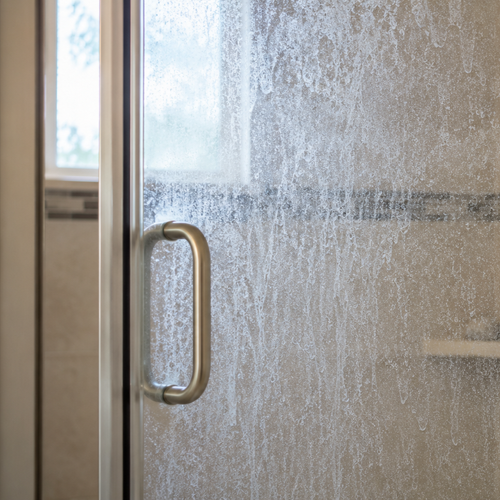
Quick Answer: A cloudy glass shower door is usually caused by hard water. Minerals in hard water leave deposits on the glass that build into a cloudy, filmy haze, and over time those minerals can actually etch into the glass surface, causing permanent cloudiness. Soap scum combines with the mineral buildup to make it worse. The fix depends on the stage: surface mineral buildup and soap scum can often be cleaned off with the right approach, restoring clarity, but glass that's been etched by long-term mineral damage may be permanently cloudy and need replacement. The best long-term solution is preventing it — squeegeeing after each shower, regular cleaning, and protective coatings that resist buildup.
A glass shower door that's gone from crystal clear to cloudy and hazy is a common frustration, especially in hard-water areas. The culprit is almost always the minerals in your water, and whether you can restore the glass depends on how far the cloudiness has progressed. Understanding what's causing the haze — surface buildup versus actual damage to the glass — tells you how to fix it and how to keep it from coming back.
The Main Cause: Hard Water
The cloudiness on a shower door is overwhelmingly caused by hard water — water with a high mineral content. Every time you shower, hard water leaves behind tiny mineral deposits on the glass as it dries. Over many showers, those deposits build up into a cloudy, filmy layer that hazes the glass. Soap scum compounds the problem: soap residue combines with the minerals to form a stubborn film that's cloudier and harder to remove than either alone. So the everyday cloudiness you see is largely mineral buildup and soap scum accumulating on the surface — and in a hard-water region, it forms quickly. This is the first and most common stage of a cloudy shower door.
The Worst Stage: Etching
Here's the important distinction: hard water doesn't just sit on the glass — over time, it can actually damage it. When mineral deposits are left on the glass for long periods, the minerals can etch into the glass surface itself, corroding and pitting it at a microscopic level. This etching causes a cloudiness that isn't just buildup sitting on top — it's damage to the glass. The critical difference is that surface buildup can usually be cleaned off, but etching is often permanent. Glass that's been etched by long-term hard-water exposure may stay cloudy no matter how much you clean it, because the surface itself is damaged. So a cloudy door can be at either stage: cleanable surface buildup, or permanent etched damage.
| Stage | What it is | Can it be fixed? |
|---|---|---|
| Surface mineral buildup | Deposits sitting on the glass | Usually cleanable |
| Soap scum film | Soap combined with minerals | Usually cleanable |
| Etching | Minerals corroded into the glass | Often permanent |
How to Fix Surface Buildup
If the cloudiness is surface mineral buildup and soap scum — caught before it etches — it can often be cleaned off to restore clarity. The right approach uses cleaning methods and products suited to dissolving and removing mineral deposits and soap scum from glass, applied carefully to avoid scratching the surface. Removing the built-up layer reveals the clear glass underneath. The key is that this works while the cloudiness is still deposits on the surface. Regular cleaning prevents buildup from reaching the point where it etches, which is why staying ahead of it matters. For heavy buildup, professional cleaning can restore glass that home cleaning can't fully clear.
When the Glass Is Etched
If the minerals have already etched the glass, cleaning won't fully restore it, because the cloudiness is now damage in the glass surface rather than a layer on top. Etched glass may remain hazy even after thorough cleaning. In that case, the realistic options are limited — heavily etched glass that can't be restored may need to be replaced to get a clear door again. This is exactly why prevention is so important: once etching sets in, it's often beyond cleaning. Recognizing whether your cloudiness cleans off (buildup) or persists (etching) tells you which situation you're in.
Preventing Cloudiness Going Forward
The best solution is preventing cloudiness in the first place, since it's far easier than removing buildup or replacing etched glass. The most effective habit is squeegeeing the glass after every shower to remove the water before its minerals can deposit — this alone dramatically reduces buildup. Regular cleaning keeps any buildup from accumulating and etching. And protective coatings applied to the glass create a surface that resists mineral and soap adhesion, making the glass easier to keep clear and slowing buildup. In a hard-water area, especially, these prevention steps are what keep a shower door clear long-term, rather than fighting a losing battle against constant buildup.
The single most effective habit is squeegeeing the glass after each shower. Removing the water before it dries stops the minerals from depositing in the first place — which prevents both the cloudy buildup and the long-term etching that buildup leads to. It takes seconds and saves you from scrubbing or replacing the glass later.
Frequently Asked Questions
Almost always because of hard water. Minerals in hard water leave deposits on the glass that build up into a cloudy, filmy haze over time, and soap scum combines with them to make it worse. In a hard-water area, this forms quickly. If left long enough, the minerals can also etch into the glass surface, causing a deeper, often permanent cloudiness that's damage rather than just buildup.
If the cloudiness is surface mineral buildup and soap scum, yes — it can usually be cleaned off with the right products and methods to restore clarity, especially if caught before it etches. However, if the minerals have etched into the glass, cleaning won't fully restore it, because the cloudiness is now damage in the surface. Whether it cleans off tells you which stage you're dealing with.
Etching occurs when hard-water minerals left on the glass for long periods corrode and pit the glass surface at the microscopic level. Unlike surface buildup that sits on top of the glass, etching is actual damage to the glass itself, which is why it causes cloudiness that's often permanent and can't be cleaned away. Etched glass may stay hazy no matter how much you clean it.
It depends on the cause. Surface mineral buildup and soap scum can usually be cleaned off, restoring the glass. But if hard-water minerals have etched into the glass surface, that cloudiness is often permanent, since it's damage rather than a removable layer. Heavily etched glass that can't be restored may need to be replaced. This is why preventing buildup before it etches is so important.
Squeegee the glass after every shower to remove water before its minerals deposit — this is the most effective habit. Clean the glass regularly to prevent buildup and etching, and consider a protective coating that resists mineral and soap buildup, making the glass easier to keep clear. In hard-water areas especially, these prevention steps keep a door clear far better than fighting constant buildup.
When the glass has been etched by long-term hard-water exposure and can no longer be restored by cleaning. If thorough cleaning doesn't clear the cloudiness because the surface itself is damaged, replacement is the realistic way to get a clear door again. A glass professional can assess whether your cloudiness is cleanable buildup or permanent etching and advise on cleaning, restoration, or replacement.
A cloudy glass shower door is almost always hard-water buildup, and the key is catching it while it's still surface deposits that can be cleaned, before the minerals etch into the glass and make the cloudiness permanent. Clean off buildup with the right approach, and prevent its return by squeegeeing after every shower, cleaning regularly, and using a protective coating. In hard water, that prevention is what keeps your shower glass clear, rather than fighting a losing battle.
Shower glass gone cloudy in the hard water? — Get it assessed for cleaning, restoration, or replacement, and protected against buildup. Luxe Residential and Commercial Glass serves the Las Vegas Valley. Call (702) 825-7463.
