
How to Tell If a Crack in Glass Will Spread: Read the Shape
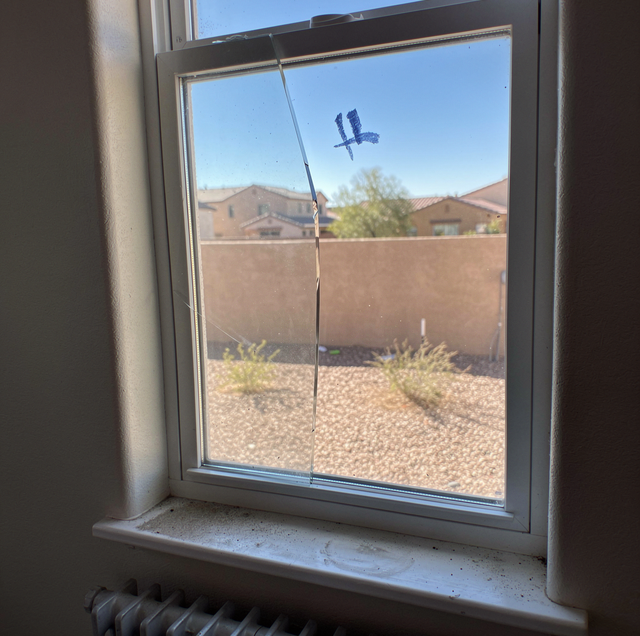
There is a line in the glass that was not there yesterday. It starts near the frame and runs out into the open part of the pane, thin enough that you have to move your head to catch the light on it. You can look at it a long while and learn nothing about what happens next. It might sit where it is for three years. It might reach the far edge by Thursday.
The line is the only evidence you have, and it carries more than it appears to. A fracture in glass records where the force started and which way it traveled, and both are readable without instruments. Find the origin, read the path, and you can usually name the cause. Name the cause, and you can predict whether the crack is finished or still working.
One tell cuts across every type. A line that forks into two or three released a lot of energy quickly, and released it already — either from an impact, or from thermal stress high enough to branch. A single unbranched line released very little, which means the pane is still holding whatever load opened it.
Thermal Stress Cracks Leave the Edge at a Right Angle
The line starts at the perimeter, holds a course close to ninety degrees to that edge for the first inch or two, then bends away and wanders across the pane in a long, smooth curve that usually does not branch. There is usually no crater or radial star at the origin, though a small shell chip from the original cutting is often what the break started from.
The cause is a temperature difference across a single pane. One region warms and tries to expand while the perimeter, shaded by the frame and in contact with it, stays cooler and does not. That difference puts the edge in tension, and the edge is the weakest part of any pane, because cutting leaves a row of microscopic flaws along the cut face. The tension finds an opening there rather than in the middle of the glass.
This kind of damage advances in steps rather than in a single run: each warming and cooling cycle reloads the same tension at the same edge and pushes the tip a little further. Heat on part of a pane happens in every month of the year, from the sun on one portion of the glass or from an appliance or vent sitting close to it. A thermal crack that has crossed half a pane since it appeared is not settling down.
Impact Cracks Radiate From a Point You Can Find
Here the origin is a place rather than a direction. Straight lines run outward from a single spot, often with concentric rings crossing them, and in thicker glass the struck face shows a small crater while the opposite face is missing a shallow cone of glass beneath it. The origin is usually small, sometimes under a quarter inch across, and this is the one crack type where the damage that started it all is still visible.
That pattern comes from energy delivered to a few square millimeters in a fraction of a second: the radial lines open first, carrying the energy outward, and the rings form afterward as the glass flexes back.
Whether it spreads turns on one question: is the pane still loaded? The impact is over and cannot happen twice. A pane sitting square in its frame, resting on its blocks with clearance all around, has nothing pushing on those radial tips, and glass in that condition can hold an old star break unchanged for years. A pane that is also being squeezed or heated unevenly is a different case, because every radial tip is a ready-made starting point for a crack that now has somewhere to go.
Pressure Cracks Follow the Load That Made Them
The origin is at the edge, as with a thermal crack, but the line does not hold a perpendicular course away from it. It curves from the start, often into a long shallow S or an hourglass through the pane, and it frequently runs some distance roughly parallel to the frame before turning in.
What causes it is the frame acting on the glass. A house settles, a header above the opening deflects under load, an opening racks out of square, or the pane was glazed hard against the frame with no edge clearance and no setting blocks under it at the quarter points. An insulated unit adds a possibility of its own, since the sealed cavity between its panes flexes them in and out every time barometric pressure or temperature moves.
This is the least forgiving of the three. The load that opened the crack is structural; it did not go anywhere, and it is still acting on the same corner. A pressure crack keeps traveling, and new glass set into an opening that is still out of square tends to crack in the same place a second time.
What Actually Makes a Crack Run
Glass has no way to give. It cannot yield and shed a load the way a metal does, so the sharp tip of a crack multiplies the stress in the pane many times over into a very small zone. A pane can carry a load comfortably for twenty years, and at that tip the same load is now enough.
Water vapor makes it worse. Moisture reacts with the strained silica bonds at the tip, which is why cracked glass under steady pressure keeps creeping forward under loads well below those required to break clean glass in one go. Ordinary indoor humidity supplies plenty.
After that it is a list of triggers, and six of them cover nearly all of it: a temperature swing across the pane, any flexing of the frame, vibration from traffic or equipment, a door slammed in the same wall, wind pressure on the exterior, and hand pressure during cleaning. The last one surprises people. A squeegee pushed hard against a cracked pane applies a bending load directly across the tip.
Mark the exact end of the crack with a fine dry-erase dot on the glass and write the date beside it. If the tip passes that dot within a week, the load driving it is still active.
The Glass Type Decides How It Ends
Annealed glass, the ordinary float glass in most older windows and fixed panes, cracks in long lines and holds together. The pieces stay wedged in the frame under the stops, the fracture edges are as sharp as anything in the house, and the pane can look stable for months while it waits for someone to lean on it. This is the one that is dangerous to leave alone.
Tempered glass does not do this at all. Its surfaces are held in compression, and when that layer is breached anywhere, the whole panel dices at once into small pieces, with no line-shaped warning stage in between. Two conclusions follow. A single line running across a pane you believed was tempered means the pane is not tempered. And a tempered panel with a chip in it can release later without a new trigger, even years after installation, due to a nickel-sulfide inclusion that was in the glass from the day it was made. Shower enclosures and slider panels are safety-glazing positions, and this behavior is why.
Laminated glass cracks and then does very little else. The plastic interlayer between its plies holds the fragments in position, so the panel stays in the opening and stays weather-tight. On safety grounds it is the least urgent of the three, which is not the same as leaving it.
An insulated unit introduces another consequence. A crack in either pane breaks the perimeter seal; the argon fill leaves, and moist air moves into the cavity, so a cracked unit will fog from the inside. That makes it a whole-unit replacement rather than a single pane, and whether the sash comes out with it gets settled at the opening.
Where a Cracked Pane Stops Being Cosmetic
Some positions change the calculation regardless of how stable the crack looks. Glass in a door or beside one, glass in a shower enclosure, glass in a railing, and any pane low enough that a person could walk or fall into it are the positions safety glazing is normally specified for, and a crack in one of those is urgent on its own merits. Which openings require safety glazing where you live is a question for the local building authority.
Until it is replaced, treat the pane as loaded. Do not press on it, wash it, lean against it or rest anything against it. Do not try to pull cracked glass out of a frame either: annealed pieces sit trapped under the glazing stops and come free in long shards the moment the pressure changes.
Keep people and pets away from a cracked tempered shower door and stop using it. Tempered glass does not fail in stages: the whole panel breaks into small pieces at once, with no warning and nothing to catch it.
Tape and Film Are Containment, Not Repair
Chip repair on a laminated windshield injects resin into a cone in the outer ply. Flat architectural glass is a different product in a different frame, and once a crack has run, the fracture faces have picked up moisture and dust, and no filler restores a bond across them. A cracked architectural pane is a replacement.
Tape and film do have a use, worth naming so nobody mistakes it for a fix. A film over the crack, or painter's tape run in an X across both faces, holds the fragments together if the pane lets go before someone can get to it. It carries no load and does not slow the crack. It controls where the pieces land.
Frequently Asked Questions
It can stop moving. A line that has run all the way across, edge to edge, has released the tension that drove it, and panes in that state often show one long line and nothing more for years. That is crack arrest, not recovery: the fracture faces never rejoin, and a fresh load starts the process somewhere else.
Much faster than the word spreading suggests. Once a crack in ordinary soda-lime glass starts running, laboratory measurements put it in the thousands of feet per second, approaching a mile a second at the top end. Growth that looks like it took weeks is really a series of near-instant jumps separated by long pauses, each set off when stress at the tip crosses a threshold.
Look in the corners. Safety glazing carries a permanent mark, usually sandblasted or acid-etched into one corner and about an inch across, naming the fabricator and the standard the panel was made to. On most panels, that mark is applied before the panel goes into the furnace. Its absence proves nothing on an installed pane, because the corner it sits in is often covered by the sash or the stop. A second field tell works through the frame: viewed in daylight through polarized sunglasses, a tempered pane usually shows faint dark blotches or stripes left by the quench jets, and an annealed pane shows none.
Measure the opening's two diagonals, corner to corner, and compare them. On a residential window or door, they should come within about an eighth of an inch of each other, and a larger difference means the opening has racked and is loading the glass across two corners. Check as well whether the sash closes evenly along its full length, and whether a hairline diagonal has opened in the drywall above the head.
Every cycle is a loading event. The panel accelerates, then stops hard against the jamb or the latch strike, and that deceleration passes straight through the glass, while the rollers feed every ridge and piece of grit in the track up through the bottom rail. If a cracked slider must remain in service until replacement, move it by hand at walking pace and catch it before it reaches the jamb.
No, and the reason a cracked tempered panel cannot be salvaged also tells you how it will end. The compression layer runs to every edge and through every existing hole, so a crack that has reached the surface has already committed the whole panel. Where a shower panel has to stay in place until the replacement arrives, the failure mode to plan for is that it releases as a sheet of fragments at floor level, which is why the enclosure gets emptied of anything stored on its ledges rather than merely taped.
Have a cracked pane looked at while it is still in one piece — a glass specialist can find the origin, identify the glass type, and tell you whether the pane is stable or still under load. Luxe Residential and Commercial Glass serves the Las Vegas Valley. Call (702) 825-7463.
