
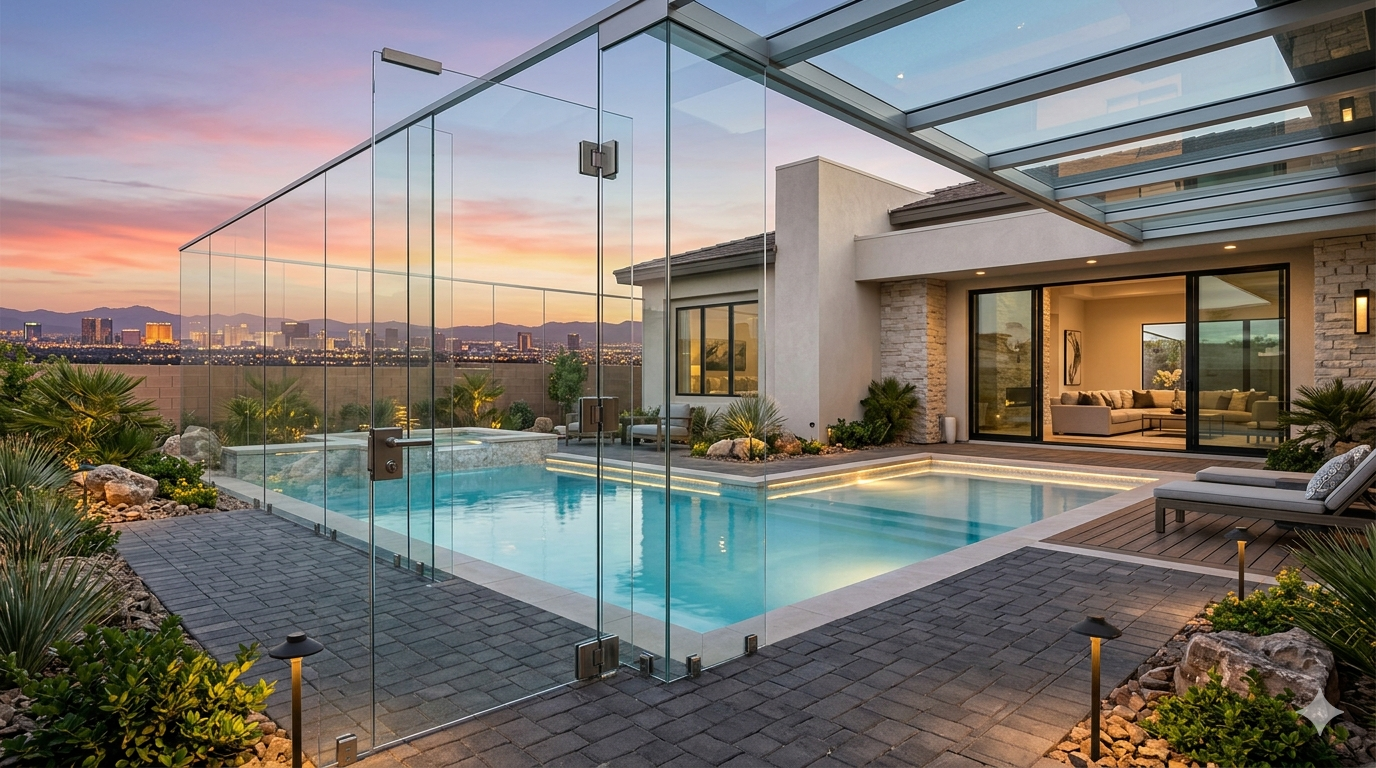
You have seen it at a neighbor's house — full glass panels around the pool, the water visible from the living room, the whole backyard feeling like one continuous space. You call a contractor for a quote. The first thing they ask is whether you've looked into permitting.
That question isn't a delay tactic. It's the honest starting point. A glass pool enclosure is a permanent engineered structure attached to your home, built with safety-rated glass adjacent to a body of water. The permit process is real, it takes time, and understanding it upfront makes the whole project run better.
Every glass pool enclosure permit involves the same core steps.
Why a Permit Is Always Part of This
Pool enclosures — glass, screen, or aluminum — are considered permanent accessory structures in virtually every jurisdiction in the country. They add covered square footage to the property, change the lot's drainage patterns, and transfer structural loads back to the building they attach to. When glass is involved, there are additional safety requirements tied to proximity to water.
There's no gray area on permitting for a project like this. The question homeowners actually need to ask isn't whether a permit is required — it's what the process involves and how long it realistically takes.
What Goes Into the Application Package
A glass pool enclosure isn't an over-the-counter permit. The building department needs a complete submittal package before they'll accept the application, and that package has to be assembled before anything goes in the door.
Engineered drawings. This is the document that drives everything else. A licensed engineer reviews the design — glass panel dimensions, anchoring system, frame connections, wind load — and stamps the drawings to confirm the structure will perform as designed. In areas with significant wind exposure, the wind load calculations are the most scrutinized part of the package. Expect the engineering phase to take two to four weeks on its own, with additional time if the engineer requests design changes.
Site plan. A scaled drawing showing the property, pool location, proposed enclosure footprint, property lines, easements, and setback dimensions. The plan examiner uses this to verify the structure meets the minimum distance requirements from property lines, neighboring buildings, and utility easements. Every jurisdiction sets its own setback distances — your contractor should know the requirements for your area before the drawings are prepared.
Material specifications. The permit documents must specify what glass is being installed — type, thickness, and safety certification. This isn't optional documentation. The inspector who comes out at the glass stage will verify that what's on the site matches what's in the permit.
Application forms and fees. Each building department has its own forms. Permit fees vary by project size and jurisdiction — from a few hundred dollars for a modest residential enclosure to considerably more for larger or commercial projects. Your contractor should give you a clear fee estimate before you sign anything.
Some jurisdictions also require a Notice of Commencement — a document recorded with the county before construction starts. Your contractor knows whether your area requires one.
The Glass Requirements Specifically
Standard glass doesn't belong anywhere near a pool enclosure. Every panel in the structure — walls, roof panels, doors — needs to be safety glass. For a glass pool enclosure, that typically means tempered glass throughout, with laminated tempered glass specified for any overhead panels where a broken piece could fall on someone below.
The pool barrier portion of the enclosure — the part that functions as the safety fence between the surrounding area and the water — has its own requirements. Most jurisdictions require the barrier to meet a minimum height, and any gate in that barrier needs to be self-closing and self-latching, with the latch positioned so it's not easily reached from the outside by a child. The engineer's drawings address these requirements as part of the design.
Glass thickness is determined by the engineering, not by preference. Panel dimensions and wind load calculations drive the spec. A large frameless panel carries more load than a small framed one, and the minimum thickness spec changes accordingly.
For a frameless glass pool enclosure, 1/2" (12mm) tempered glass is commonly specified for wall panels exposed to significant wind load. Thinner panels may meet minimum structural requirements but leave little margin. Ask your contractor what thickness is specified in the engineering drawings and why.
Plan Review: Where the Time Goes
Once the application package is submitted, it enters plan review. A plan examiner checks the documents against the applicable requirements, and in most jurisdictions, the application goes through multiple departments — building, zoning, and public works at a minimum.
This stage takes time, and it's largely outside your contractor's control. A quiet period at the building department might mean two to three weeks. A busy spring season, when everyone is pulling permits for outdoor projects, can stretch that to five or six weeks. Some departments run all reviews simultaneously. Others queue them sequentially, which means each department waits for the previous one to finish.
If the plan examiner finds something that doesn't line up — a setback issue, an engineering detail that needs revision, a missing callout on the drawings — they issue a revision comment. Your contractor addresses it, resubmits, and the review restarts. A clean first submission is worth a lot. Contractors who know the local department know what examiners typically look for, and they prepare the package accordingly.
And don't forget the HOA if your property is in one. HOA architectural review is a completely separate process from the building permit. The two don't coordinate. Some HOA committees meet monthly, which means a submittal that just missed the meeting date waits another month. Start HOA review the same week you start engineering.
The Inspection Sequence
Inspections occur at specific stages during construction, and each stage must pass before work can continue. The sequence varies somewhat by jurisdiction, but for a glass pool enclosure, it generally runs like this.
The footing or anchor inspection comes first — the anchoring system that holds the frame to the existing deck or slab is inspected before any concrete is poured over it or any framing covers it up. Then, a structural or framing inspection, once the metal frame is assembled, confirms it matches the engineered drawings. The glass inspection follows installation of the panels, verifying that the glass on site matches the specifications in the permit. And finally, a full close-out inspection confirms the pool barrier functions correctly — gates latch, heights are met, and the structure is complete.
Scheduling each inspection takes time, too. In a busy season, inspection slots may be three to five business days out. That gap accumulates across multiple stages. It's not unusual for inspections alone to add two to three weeks to the construction timeline.
What Happens Without a Permit
Homeowners who try to skip the permit process on structures like this. It never ends well. Unpermitted construction can result in fines, a stop-work order mid-project, or a requirement to remove the structure entirely. When the house goes to sell, an unpermitted structure either has to be disclosed or — if it's discovered during the buyer's inspection — becomes a negotiating problem that costs more to resolve than the permit would have cost upfront.
Homeowner's insurance is another issue. A claim involving an unpermitted structure gives the insurer grounds to deny or reduce coverage. A glass pool enclosure is a meaningful investment. Getting it permitted protects that investment.
What a Realistic Timeline Looks Like
Start to finish, a fully permitted glass pool enclosure project typically runs several months. Two to four weeks for engineering. Two to six weeks for plan review. Then construction, with inspections built in at each stage. If the HOA review runs on a monthly meeting cycle, add that at the front end.
Frequently Asked Questions
In virtually every jurisdiction, yes. Pool enclosures are classified as permanent accessory structures, and the presence of safety glass adjacent to a body of water adds additional requirements. There's no realistic path to a legitimate installation without a permit.
Engineering takes two to four weeks. Plan review adds two to six weeks. With construction, inspections, and any HOA review, the full project commonly spans several months. Timelines vary significantly by jurisdiction and building department workload.
Safety glass throughout — tempered for vertical panels, laminated tempered for overhead glass. The engineering drawings specify thickness based on panel dimensions and wind load calculations for your site.
If your property is governed by an HOA, likely yes. HOA architectural review runs on its own timeline and has no connection to the building permit process. Start both at the same time.
A licensed, experienced contractor handles the permit process as part of the project — pulling the application, coordinating plan review, scheduling inspections, and managing the close-out. That's included in the scope of work, not an add-on.
Fines, potential required demolition, complications at resale, and gaps in homeowner's insurance coverage for damage to the unpermitted structure. The cost of permitted work is real. The cost of unpermitted work that gets discovered is typically higher.
The Process Is Manageable With the Right Contractor
Getting a glass pool enclosure permitted involves real documentation, real timelines, and inspections that can't be rushed. But it's a well-worn process for contractors who do this work regularly. The homeowners who come out ahead are the ones who understand the timeline going in, don't build an artificial deadline into the project, and work with a contractor who has navigated the local permitting process before.
Schedule a glass enclosure consultation — Luxe Residential and Commercial Glass handles glass pool enclosures, frameless glass walls, and custom outdoor glass structures throughout Las Vegas, Henderson, North Las Vegas, and the surrounding metro. Call (702) 825-7463 (License #0090853) to schedule.
