Framed vs Frameless Shower Doors: Which Fits Your Bath?
Quick Answer: A framed shower door has metal framing around the glass panels, while a frameless door uses thicker, sturdier glass held by minimal hardware with no surrounding frame. Frameless doors offer a sleek, open, high-end look, make the bathroom feel larger and more open, and are easier to clean since there's no frame to trap grime — but they cost more and use heavier glass. Framed doors are more economical, structurally supported by the frame, and a classic choice, but the frame can collect water, soap, and grime and has a more traditional look. The right choice depends on your style preference, budget, and how much the open look and easier cleaning matter to you.
When choosing a shower door, one of the main decisions is framed versus frameless. Both enclose your shower and keep water in, but they look and function quite differently — and the gap between them shows up in appearance, cleaning, and cost. Understanding how they compare helps you choose the door that fits your bathroom's style and your priorities.
What Sets Them Apart
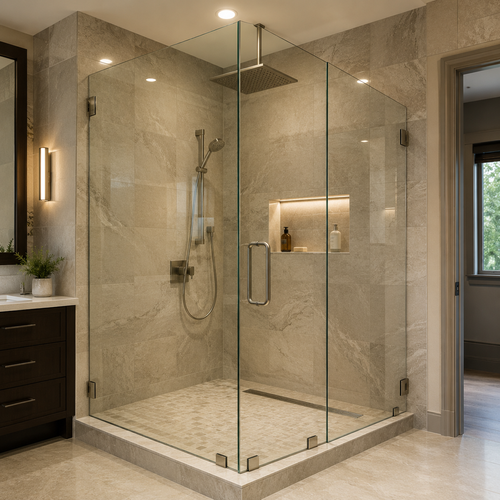
A framed shower door has metal framing (typically aluminum) around the perimeter of the glass panels. That frame provides structural support, so the glass can be thinner, and it's the traditional, familiar shower door design. A frameless shower door, by contrast, uses thicker, heavier, sturdier glass that supports itself, held in place by minimal hardware — hinges and clips — with no frame surrounding the glass. The thicker glass is necessary precisely because there's no frame to support it. So the core difference is a metal frame around supported thinner glass (framed) versus standalone thicker glass with minimal hardware (frameless), and that difference drives the comparison in looks, cleaning, and cost.
The Look and Feel
Appearance is often the biggest deciding factor. Frameless doors are prized for a sleek, modern, high-end appearance. With no frame interrupting the view, the glass is nearly invisible, which creates an open, spacious feel and showcases your tile and shower. This openness can make a bathroom feel larger and more luxurious, which is a major reason people choose frameless. Framed doors have a more traditional, classic look, with the visible metal frame defining the enclosure. The frame is part of the design, available in various finishes. So the choice is partly between the airy, upscale, frame-free look of frameless and the more conventional, defined look of framed — largely a matter of the style you want.
| Factor | Framed | Frameless |
|---|---|---|
| Look | Traditional, defined by frame | Sleek, open, high-end |
| Glass | Thinner, supported by frame | Thicker, self-supporting |
| Sense of space | More enclosed | Open, larger feeling |
| Cleaning | Frame can trap water/grime | Easier; no frame to trap buildup |
| Cost | More economical | Higher |
Cleaning and Maintenance
A practical difference is cleaning. On a framed door, the metal frame and its tracks and channels can trap water, soap scum, grime, and even mold over time, requiring more effort to keep clean and offering more places for buildup to hide. A frameless door, with no surrounding frame, has fewer crevices to collect grime, making it generally easier to clean and keep looking good. For many people, this easier maintenance is a real appeal of frameless, especially in a hard-water area where buildup is a constant battle — fewer nooks means fewer places for deposits to accumulate. So if low-maintenance cleaning matters to you, frameless has an advantage here.
Cost and Practical Considerations
Cost is where framed doors have the edge. Framed shower doors are generally more economical, both because they use thinner glass and because of their construction. Frameless doors cost more, reflecting the thicker, heavier glass and the design. So a framed door is the budget-friendlier choice, while a frameless door is more of an investment for its look and feel. There are also practical points: frameless doors use heavy glass that needs proper installation and support, and both types need to be suited to your specific shower opening and configuration. Your bathroom's layout, the look you want, and your budget all factor into what makes sense.
Think about how the door will affect the sense of space, especially in a smaller bathroom. A frameless door's nearly invisible glass can make a compact bathroom feel noticeably more open and larger, while a framed door more visibly divides the space. If an open, airy feel is a priority, that's a strong point in favor of frameless.
How to Choose
The decision comes down to your priorities. Choose frameless if you want a sleek, modern, high-end look, an open, spacious feel, easier cleaning, and a higher cost that fits your budget — it's the upscale, low-maintenance choice that showcases your shower. Choose framed if you prefer a more economical option, don't mind the traditional look and the extra cleaning the frame requires, and want the budget-friendly door. Consider your style preference, how much the open look and easy cleaning matter, your bathroom's layout, and your budget. Both are quality options that enclose your shower well; the right one matches the appearance and priorities you're after. A glass professional can show you both and help you choose for your bathroom and opening.
Frequently Asked Questions
A framed door has metal framing around the glass panels, allowing thinner glass supported by the frame. A frameless door uses thicker, self-supporting glass held by minimal hardware with no surrounding frame. The thicker glass is needed because there's no frame to support it. This core difference drives how they compare in appearance, cleaning, and cost.
Neither is universally better — they suit different priorities. Frameless doors offer a sleek, open, high-end look, make the bathroom feel larger, and are easier to clean, but cost more. Framed doors are more economical and structurally supported by the frame, but have a more traditional look and a frame that collects grime. The better choice depends on your style, budget, and priorities.
Generally yes. A frameless door has no surrounding frame with tracks and channels to trap water, soap scum, grime, and mold, so there are fewer crevices for buildup to hide, making it easier to clean. A framed door's metal frame collects buildup over time and takes more effort to keep clean. In hard-water areas, especially, the easier cleaning of frameless is a notable advantage.
Because they use thicker, heavier glass that supports itself without a frame, and the design and hardware reflect that. Framed doors use thinner glass supported by the frame, making them more economical. So the frameless door's higher cost comes from the heavier glass and the frame-free construction, which is the trade-off for its sleek look and easier cleaning.
They can. Because frameless doors have nearly invisible glass with no frame interrupting the view, they create an open, spacious feel that can make a bathroom — especially a smaller one — feel larger and more open. A framed door more visibly divides the space. If an airy, open feel is a priority, the frameless door's openness is a strong advantage.
It depends on your priorities. Choose frameless for a sleek, modern, open look and easier cleaning if the higher cost fits your budget. Choose framed for a more economical, traditional option if you don't mind the frame's look and cleaning. Consider your style, how much the open feel and easy maintenance matter, your bathroom layout, and your budget. A glass professional can help you decide for your specific shower.
Framed and frameless shower doors both enclose your shower well, but they differ in look, cleaning, and cost. Frameless offers a sleek, open, high-end feel and easier cleaning at a higher price, while framed is the more economical, traditional choice with a frame that needs more cleaning. Weigh how much the open look and low-maintenance cleaning matter against your budget, and the right door for your bathroom becomes clear.
Choosing between a framed and frameless shower door? — Get expert guidance and options that fit your bathroom and budget. Luxe Residential and Commercial Glass serves the Las Vegas Valley. Call (702) 825-7463.
