
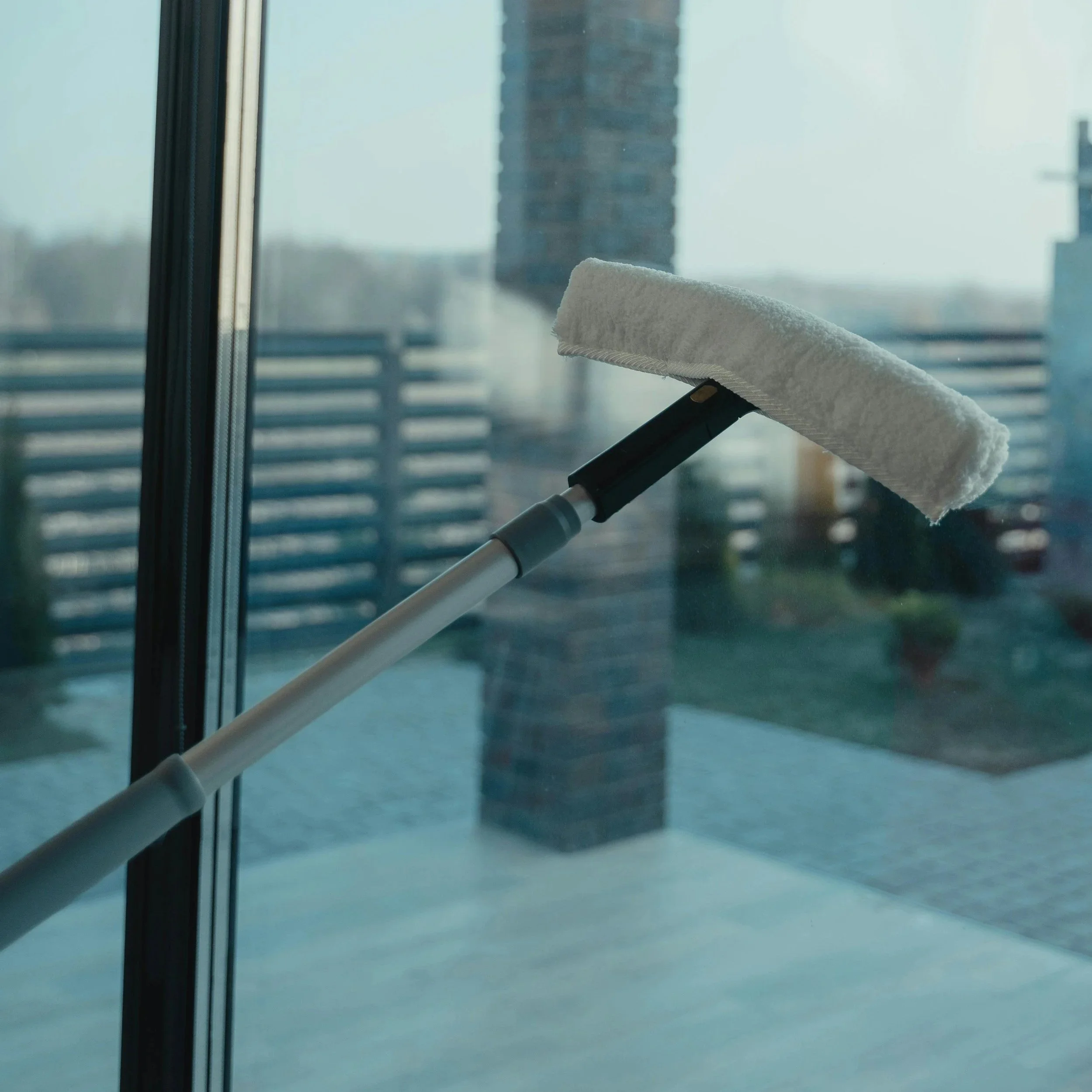
You notice it on a cool morning — a hazy film sitting between the panes that wasn't there last month. You try wiping it from the inside, then the outside. It doesn't move.
That's not condensation on the surface. That's a failed window seal, and no amount of wiping will change it.
What a Window Seal Actually Does
Modern double-pane and triple-pane windows aren't just two sheets of glass set close together — they're sealed insulated glass units (IGUs). Two panes are bonded at their edges, with argon gas trapped in the cavity between. Argon is a poor conductor of heat, which is why a properly sealed window keeps rooms cooler in summer and warmer in winter.
The seal is actually a two-part system. The inner seal — made of polyisobutylene — bonds directly to the glass edges around the aluminum or warm-edge spacer bar that runs the perimeter of the unit. That spacer contains desiccant beads, a moisture-absorbing material designed to catch any humidity that finds its way inside. The outer seal, typically silicone or polysulfide, provides structural integrity and keeps the unit from racking under load.
Both seals work together. When either one fails, moisture enters the cavity, the argon escapes, and the window starts performing like a single pane of glass.
Why Fog Doesn't Always Appear Right Away
Here's what most people don't realize: the desiccant beads inside the spacer bar can absorb a surprising amount of moisture before any fog becomes visible. Early in the failure process — when just a small breach has formed — humid air enters slowly. The desiccant catches it before it condenses on the glass. The unit looks completely fine.
But desiccant has a capacity limit. Once those beads are saturated, they can't absorb any more moisture. That's when condensation becomes visible between the panes. By the time you can see the fog, the seal has typically been failing for months.
This explains why fog comes and goes in the early stages. On cool nights, humid air condenses between the panes. On warm afternoons, temperatures rise and the moisture evaporates back into vapor — temporarily invisible. If the fog in your window disappears on warm days and reappears when temperatures drop, the seal has failed but the desiccant isn't fully saturated yet. That's early-stage failure.
Once the fog stops clearing regardless of time of day or season, the desiccant is spent. The window won't recover on its own.
The Signs That a Window Seal Has Failed
Persistent Fog or Haze Between the Panes
The clearest sign is moisture trapped inside the glass sandwich — moisture you can't reach from either surface. One quick test: try wiping the fog from both sides with a dry cloth. If it stays after wiping both surfaces, it's inside the unit, not on it.
Understanding the Three Types of Window Condensation
Not all window condensation means seal failure. Location tells you what you're dealing with:
| Location | What It Means | Action Needed |
|---|---|---|
| Between the panes (inside the IGU) | Seal failure — trapped moisture, argon gone | IGU replacement or full window replacement |
| On the exterior surface (outside face) | Normal — window is insulating well | None required |
| On the interior surface (room-facing) | Indoor humidity too high | Ventilation or dehumidifier |
The only condensation that signals seal failure is moisture between the panes. Exterior condensation on cool mornings actually means the window is doing its job.
Mineral Haze That Won't Clear
When condensation forms and evaporates repeatedly inside the unit, it leaves mineral deposits on the interior glass surfaces. Those deposits etch into the glass over time, turning clear glass permanently cloudy or milky. At that stage, cleaning does nothing — the damage is physical. Replacing the IGU is the only way to restore clarity.
Cold Spots on the Glass Surface
Run your hand slowly across a window on a cold day. A properly sealed argon-filled unit feels noticeably warmer than one that has lost its gas fill, because the argon slows heat transfer across the cavity. If one window feels significantly colder than others — or if the center of the glass feels nearly as cold as the outdoor temperature — the gas is gone.
Some homeowners come in certain their HVAC system was failing because one room always felt drafty no matter how high they set the thermostat. We'd check the windows and find a double-pane unit that had lost its seal two or three years earlier. The system was fighting a window that was basically performing like a single pane.
Distorted Reflections
A sealed IGU maintains slight positive pressure from the gas fill. When that gas escapes, the pressure equalizes and the panes can flex slightly — especially on larger units. Look at the reflection of a straight edge in the glass: a window frame, a door jamb, a vertical line on a wall. If the reflection bends or ripples where it should be straight, the pane geometry has shifted.
Drafts Near the Frame
But seal failure and drafts aren't the same problem. A draft means air is moving through the assembly — that points to deteriorated weatherstripping, a warped frame, or perimeter gaskets that have hardened and cracked. IGU seal failure is about the gas gap inside the unit, not the frame perimeter.
That said, both problems often arrive together. A window that has been thermally stressed enough to lose its IGU seal has usually put stress on the frame too. If you feel airflow around a window that also has fog between the panes, the entire assembly deserves evaluation.
Higher Energy Bills Without a Clear Cause
A failed double-pane window can perform close to a single-pane in terms of heat transfer once the argon fill is gone. If energy bills have climbed without any change in thermostat habits or equipment, and multiple windows show other failure signs, you're likely losing significant conditioning through the glass.
Three At-Home Tests Worth Running
These won't replace a professional assessment, but they give you clear information before you call.
The fog wipe test: try wiping the fog from both surfaces of the glass. If it clears when you wipe, it's surface condensation. If it stays after wiping both sides, it's inside the unit.
The oblique light test: at dusk or dawn, stand to the side of the window and look along the glass at a low angle rather than straight through it. Interior mineral haze and the faint rainbow patterns left by repeated condensation show up much more clearly in raking light. This works well for catching early-stage etching before it's obvious head-on.
The draft test: on a calm day, hold a thin piece of tissue paper at the frame edges and corners. Any flutter points to air infiltration around the frame or weatherstripping — a separate issue from IGU seal failure, but useful to know about.
What Actually Causes Seals to Fail
Thermal pumping is the primary driver. Every day the sun heats the glass — especially on south- and west-facing exposures — and the air in the gap expands. Every night it cools and contracts. That daily cycle flexes the sealant thousands of times per year. UV exposure accelerates the process by hardening polymer sealants on sun-exposed windows faster than shaded ones age.
The outer silicone or polysulfide seal typically goes first on windows with heavy direct sun exposure. The inner polyisobutylene seal is more durable, but poor installation compromises it too. An out-of-square rough opening puts constant rack stress on the edge bond — that stress starts from day one, before thermal cycling even begins. That's why new construction windows sometimes fail within five to eight years on homes where the framing shifted during settling.
Seals typically last 10 to 20 years, but that range is wide for a reason. A north-facing window with no direct sun in a mild climate can reach 25 years without issue. A south-facing window in a hot-summer desert climate, taking full afternoon UV every day, can start showing failure at 8 to 10 years.
One thing that accelerates failure faster than most homeowners expect: adhesive window film applied after installation. Non-manufacturer-approved films trap heat at the glass surface, dramatically increasing the temperature differential across the unit and amplifying the daily thermal pumping cycle. If you've applied aftermarket film to your windows and they're failing early, that film is likely a contributing factor.
Defogging Is Not a Fix
Some companies offer defogging services — they drill small holes into the glass, flush the cavity with desiccant or cleaning solution, and reseal the holes. It clears the visible fog.
Defogging is a cosmetic fix. Full stop.
The insulating gas is already gone. The desiccant is spent. Drilling holes doesn't restore either. You'll have a window that looks clearer for a season or two, but one that now has permanent holes through the glass and no thermal performance to speak of. Homeowners who go this route often end up spending more total than if they'd replaced the IGU from the start.
The right fix is replacing the insulated glass unit — the two panes, the spacer bar, the desiccant — while leaving the existing frame in place if it's structurally sound. That restores both appearance and thermal performance. If the frame is also warped, rotted, or the window is beyond 20 years old with multiple failure points, full window replacement is the smarter call. For windows with sound frames, IGU-only replacement is almost always the more economical path when the frame checks out.
Frequently Asked Questions
Not in any way that restores performance. Defogging clears the fog cosmetically but leaves you with a unit that has no insulating gas and damaged interior surfaces. The true fix is replacing the IGU or the full window. If your frame is structurally sound, IGU-only replacement is typically the more cost-effective option — a glazier can swap the glass unit without disturbing the frame, interior trim, or siding.
Wipe both surfaces with a dry cloth. Surface condensation — whether exterior dew or interior humidity — clears when you wipe the relevant side. Fog that stays after wiping both surfaces is trapped inside the unit. That's the diagnostic. No special tools needed.
Not necessarily. If the frame is square, structurally sound, and the hardware works, a glazier can replace just the insulated glass unit. Full window replacement makes more sense when the frame is rotted, warped, or when multiple seals in the same window opening have failed. Get an assessment before assuming you need a full replacement — in many cases, the frame is fine and glass-only work handles it.
Typically 10 to 20 years, though orientation matters more than most people realize. North-facing windows in shaded locations tend to reach the upper end of that range. South- and west-facing windows with heavy direct sun exposure, especially in climates with wide temperature swings, often fall at the low end — or below it. Installation quality also matters: a window set in an out-of-square opening has been under stress from day one.
That's early-stage seal failure. When a small breach first forms, the desiccant beads in the spacer bar absorb the incoming moisture — enough that fog doesn't appear on warm days when humidity is low. On cool nights, condensation forms between the panes and becomes visible. As the desiccant approaches saturation, the fog takes longer to clear and eventually stops clearing altogether. When the fog no longer goes away on a warm afternoon, the desiccant is spent. At that point, a glazier can confirm it in under five minutes.
The IGU seal failure itself isn't structural — the glass won't fall out because the gas cavity has been breached. But a window that's been under enough thermal and mechanical stress to fail its seal may also show frame issues: warping, hardware that won't latch, or weatherstripping that no longer seals. Those frame problems are where the actual safety concerns live. If you're seeing fog between the panes alongside a sash that won't lock correctly, don't treat them as separate issues. One glazier visit covers both.
Schedule a window seal inspection or IGU replacement — Luxe Residential and Commercial Glass handles window glass diagnostics and insulated glass unit replacement throughout Las Vegas, Henderson, North Las Vegas, and the surrounding metro. Call (702) 825-7463 (License #0090853) to schedule.
