
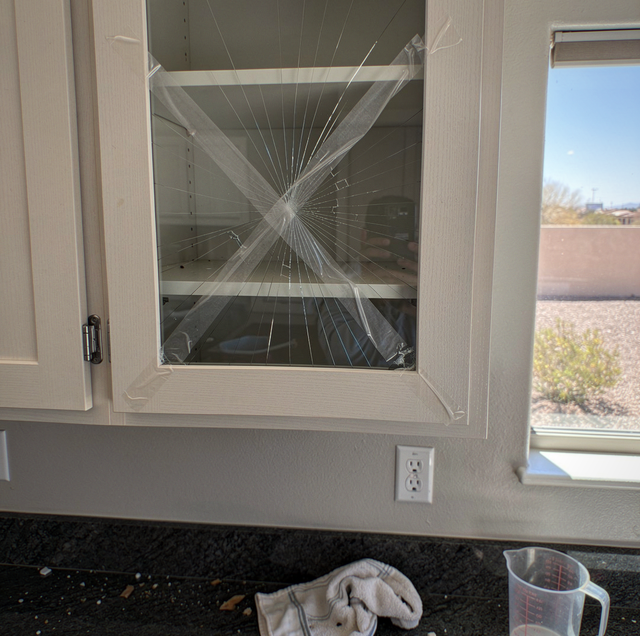
A glass cabinet door is built from two separate pieces that only look like one. A wood, metal, or composite frame surrounds an opening, and that opening carries a shallow groove or rabbet cut along its inside edge. The pane sits inside that groove, held in place by whichever retention method the door's maker chose, not by any bond to the frame itself. Because the glass and the frame are two separate parts from the start, a cracked or shattered pane can be replaced on its own on each retention method in the table but one, a pane captured in a glued frame groove. On those doors, the door itself, its hinges, and its finish stay in service.
How that pane is held in decides how the old glass comes out and how the new one goes back in. The following pairing matches each retention method to what removing it entails and what a technician needs to know before starting.
| Retention Method | How the Pane Comes Out | What It Means for the Repair |
|---|---|---|
| Glazing points and putty | Small metal points pressed into the wood hold the pane; the putty bead is cut and scraped away, then the points are pulled | The wood rabbet underneath can be left undamaged when the putty is cut out carefully, so the same points or new ones reseat the next pane |
| Wood or plastic retainer strips | Thin strips tacked or screwed along the inside of the opening come off with their fasteners, freeing the pane without disturbing the frame finish | The same strips, or a matching replacement, go back over the new pane once it is seated |
| Silicone or adhesive bead | The bead is sliced away from the glass and the frame with a blade, then the residue is cleaned off both surfaces | A fresh bead has to cure before the door sees regular use again fully |
| Rubber glazing gasket | The gasket stretches or peels away from the pane's edge once one corner is worked loose | The same gasket can be reused on the new pane if it wasn't damaged coming off |
| Clips on frameless or metal-framed doors | Spring or screw clips release with a small tool, and the pane lifts straight out of the frame | Clips keep this swap contained to the glass alone, since no adhesive or sealant needs to be redone |
| Pane captured in a glued frame groove | The glass is bonded into the groove itself, so the door has to come apart at its joints to reach it | Reaching the pane means taking the door apart at its joints, which puts the door itself into the repair |
Making the Broken Door Safe Until the Repair
Tape stretched in an X or a grid across the cracked or shattered area, applied before the door is touched again, holds loose fragments together instead of letting them separate and fall as the door moves. Work gloves and eye protection belong on hands and eyes before anyone gets close enough to the opening to tape it, since a cracked edge is already sharp whether or not it has come apart yet.
Broken tempered glass comes apart in small, blunt pieces, and those pieces still cut at the edges.
Shards still seated in the rabbet of a broken cabinet pane can slice fingers and palms the moment anyone grips them to pull them free, even through thin gloves. A glass technician clears the groove with glazing tools.
A door whose pane is held by points, strips, or a gasket can be lifted off its hinges once the crack is taped and set flat out of the way, since none of those bonds the glass; a door with a bead or a captured pane stays hung until a technician arrives.
Glass Types for Cabinets
Cabinet panes come in the same range of glass types used elsewhere in the house. Plain annealed glass fits an upper cabinet with nothing stacked against the door and no one likely to lean on it. Tempered glass is best for low cabinets, spots near a bar, or a door that gets bumped or leaned on, because of how it breaks. Textured glass, with a pattern rolled into the surface, seeded glass, with small bubbles held in the sheet, and frosted glass, which scatters light instead of passing a clear image through, all hide what's stored behind the door while still letting light in; each is a design choice as well as a functional one. Laminated glass, built around a plastic interlayer that keeps a cracked pane from separating and letting fragments fall away, is worth considering for a cabinet door where keeping a broken pane in the frame is the priority, such as a display case set high or near a play area. Which type belongs in a given door depends on the cabinet's height, its location, and how the household uses it.
Matching a Pattern or Finish on the Other Doors
A broken pane sits inside a run of matching cabinet doors, and an exact match keeps the repaired one from standing out from its neighbors. Textured, seeded, and frosted glass all vary by maker in how coarse the pattern is and how it repeats across the pane, so a saved fragment of the broken glass, even a small one, tells a glass shop more than a description in words. Tinted or colored glass carries the same challenge, since a shade sold as bronze or gray is not the same recipe from every supplier, so matching against the glass itself, not the color name on a sample card, is what keeps every door in the run looking the same.
A saved fragment only helps if it stays with its own door. When more than one door in a run is broken, a note taped to each door naming its opening keeps samples and frames paired for the glass shop.
Measuring the Opening Versus the Old Pane
The number that matters for a replacement pane is the size of the rabbet or groove the glass sits in, not the size of the glass you can see through the door. A retainer strip, a bead of sealant, or a gasket covers a narrow margin of glass all the way around the opening, so for any of those methods the visible daylight size runs a little smaller than the piece that gets cut. Measuring the frame opening from the back of the groove on each side, then checking both diagonals to confirm the opening is square, gives the glass shop the opening size from which the new pane is cut. A door with a slightly out-of-square opening still gets fit with a pane cut to the tightest usable dimension, rather than forced to match a frame that has shifted since it was built.
Leaded or Divided-Lite Doors
A leaded or divided-lite cabinet door, built from several small panes held by lead or wood muntins instead of one sheet of glass, is a different repair altogether, since only the lead came or the glazing around the one broken lite is opened rather than the whole door.
Replacing the Pane in Its Groove
A cabinet glass replacement runs through these steps once the type and pattern are settled. The opening is measured at the rabbet, the old retention material comes out cleanly so the new pane can seat properly, and the replacement glass is cut or ordered when a custom pattern or tint has to be sourced from a supplier. The new pane goes into the same groove the old one used, held by the door's original retention method or a suitable equivalent, and any bead or putty around the edge gets finished so nothing rattles or works loose with normal use.
Frequently Asked Questions
Sometimes, within a narrow range. A wood rabbet or retainer strip is cut for one glass thickness, and a thicker pane can stand proud of the frame so the strip or points no longer sit flat against it. The rabbet depth measured behind the old pane settles it before the glass is ordered.
The frame opening and the retention method still tell a glass shop what it needs to order: the size from the rabbet, the depth from how far the groove runs, and sometimes the glass type from a sliver still riding in the groove even when the visible pane is gone. Pattern and tint are the two things that can't be reconstructed from the opening alone, and those get chosen fresh when no sample survives.
The glass itself won't affect the wood, but the process can expose finish that was hidden under the old retainer strip or bead, since that trim covered a narrow band of the frame for as long as the door existed. Resetting new retention material over that same band can hide it again, but swapping to a different material, wood to plastic for instance, can leave a visible edge line that wasn't there before.
It can happen on an older cabinet that's had one prior repair: a door original to points and putty, with a later panel resealed under a silicone bead instead, isn't a sign of a mistake. A technician only needs to know which method holds the piece being replaced, rather than assuming the whole door matches throughout.
A leftover corner or offcut of the new glass, when the shop can supply one. An offcut from a tempered pane comes from the sheet before it was tempered, so it matches pattern and tint but is not tempered itself; the glass type on the order record covers that.
When hardware sits close enough to the opening to block the work. A knob, a latch, or a magnetic catch mounted near the frame can block a retainer strip or a clip, and it has to come off to reach it; putting it back afterward is part of finishing the job, even though the hardware itself wasn't the reason for the repair.
Set up cabinet glass replacement — measurement at the rabbet, a pane matched to the other doors, and refitting with the door's own retention method. Luxe Residential and Commercial Glass serves the Las Vegas Valley. Call (702) 825-7463.