
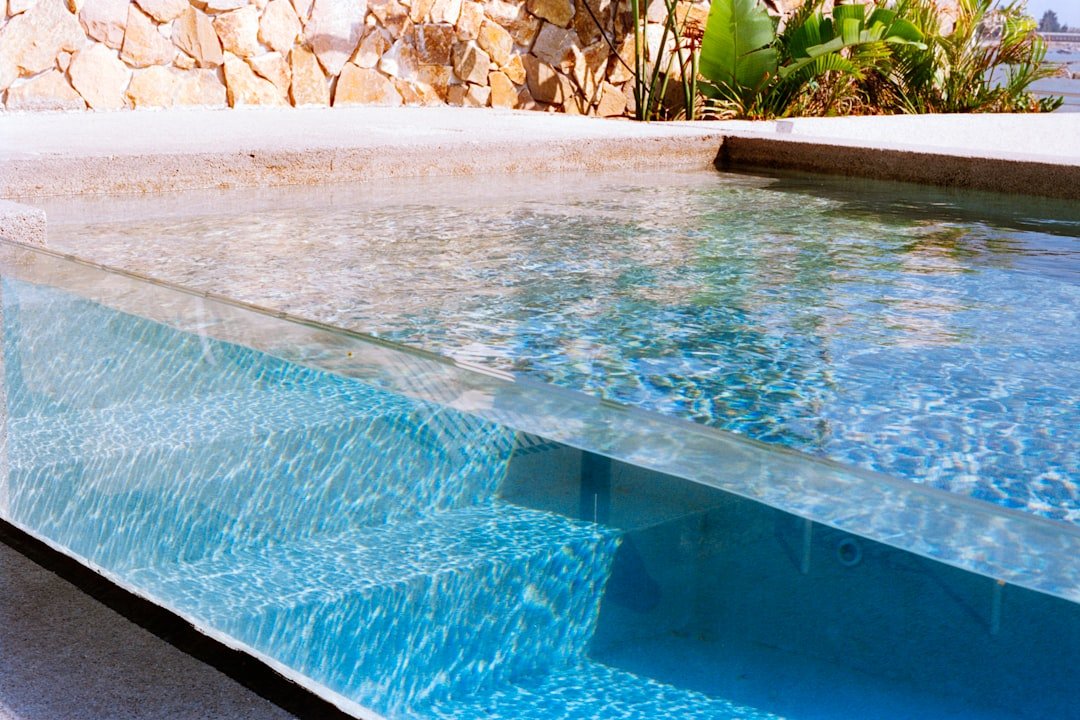
You are standing in your backyard, looking at a sagging aluminum channel, where the glass panel meets the deck. There is a rust-colored stain running down the concrete, and the post wiggles when you push it. The glass itself looks fine. But whatever was holding it in place? That's a different story.
It's a common conversation with homeowners who chose their pool enclosure based on what they saw in the showroom, not on how the hardware actually ages. Frameless and framed glass enclosures are both excellent systems — but they fail in different ways and at different rates. Knowing that in advance changes which one makes sense for your project.
What 'Frameless' and 'Framed' Actually Mean
Before comparing durability, it helps to understand what each system is at the hardware level.
In a framed glass pool enclosure, aluminum or steel posts carry the structural load. Glass panels slot into channels — usually a top rail and a bottom track — and the frame keeps everything plumb and rigid. The glass is an infill; the metal is the skeleton.
In a frameless glass pool enclosure, the glass panels are structural. They're held in place with stainless steel spigot clamps or base shoes that anchor directly into the deck or fascia. There are no vertical posts between panels. The glass — thicker because it has to carry more of the load — is doing the structural work.
That distinction matters for durability because the failure patterns follow the structure. In framed systems, the frame fails first. In frameless systems, the hardware fails first. The glass itself rarely fails in either system under normal conditions.
Glass Thickness: Where Durability Starts
Frameless panels are thicker because they have to be. Standard frameless enclosure glass runs 12mm tempered. Framed systems typically use 8–10mm tempered glass because the frame provides the rigidity the thinner glass can't carry on its own.
Tempered glass at either thickness is heat-treated to approximately four to five times the strength of standard glass. If it breaks, it shatters into small, rounded pieces rather than jagged shards — that's a built-in safety feature, not a weakness. In practice, both 8mm and 12mm tempered panels hold up well to normal impact and weather.
But the glass is rarely what fails. The hardware is.
Where Each System Actually Fails
Framed Systems: The Frame Is the Weak Point
In a framed pool enclosure, the aluminum posts, bottom channels, and mounting anchors are constantly exposed to pool chemistry — chlorine, salt from saltwater systems, pH adjusters, algaecide. The chemicals don't touch the glass much. They settle into the track at the bottom, where water collects and sits between the glass and the channel.
That's where the damage starts. Over three to five years, mineral deposits build up in the track. In areas with hard water, that buildup combines with pool chemicals to accelerate corrosion on aluminum and create stress on the glass edges. The glass edge sits in a vinyl gasket inside the channel — that gasket dries out under UV exposure and loses its grip. Once the gasket fails, the glass starts to rattle and the seal breaks down.
The posts, if powder-coated aluminum, typically hold up well for seven to ten years before corrosion becomes visible — especially at anchor points where the post meets concrete. If the anchor was drilled into a pool deck and the concrete holds any moisture, the wet/dry cycle combined with chemical exposure, weakens the connection from the inside.
Framed systems can still look decent on the glass, but had posts that pulled straight out of the deck with moderate force. The concrete around the anchor had essentially crumbled — you'd never know just from looking at the glass.
Frameless Systems: The Spigot and Gasket Are the Weak Points
In a frameless system, the stainless steel spigots that grip the glass don't corrode in pool environments the way aluminum does. Grade 316 stainless steel is the standard for exterior pool hardware — it has enough nickel and molybdenum content to resist chlorine and salt. A properly spec'd frameless system will show very little metal degradation over 10 to 15 years.
But frameless systems have a different failure point: the rubber gasket inside the spigot clamp. That gasket is what actually contacts the glass edge. In extreme UV environments, rubber degrades faster than the stainless steel body around it. The gasket compresses and cracks. When it fails, the clamp loses its grip on the panel, and you start to see micro-movement — a slight wobble when you press against it.
The physical test is simple: press the flat of your palm firmly against a frameless panel, about one-third of the way up from the spigot. You should feel no movement whatsoever. Any flex or faint click means the gasket has compressed or the spigot is loosening. That's an early warning, not an emergency — but it needs attention before it becomes one.
How Desert Heat Changes the Equation
Most durability comparisons on this topic are written for coastal climates. The factors that age a pool enclosure in extreme desert conditions are different, and they accelerate timelines on both systems.
Aluminum channels in framed systems expand about 0.013 inches per linear foot for every 100°F of temperature change. A pool enclosure in a desert climate can experience a 70°F to 80°F swing between a winter night and a summer afternoon. On a 10-foot aluminum channel, that's a cumulative movement of roughly 0.10 inches per day, every day the seasons shift. The sealant at the track joints and the gaskets at glass-to-channel contact points are cycling constantly. Over several years, that cycling cracks sealants and hardens gaskets in ways that rarely happen in moderate climates.
UV exposure compounds this. The ultraviolet index in the desert runs well above the national average for most of the year. UV degrades vinyl gaskets, silicone sealants, and rubber isolation pads faster than they degrade in coastal or northern climates.
Frameless systems handle thermal cycling better because there's less channel material to move. The spigot is a discrete, rigid component — it doesn't flex along a 10-foot run the way a bottom track does. The trade-off is that the glass itself absorbs more of the temperature differential, which is why tempered glass is essential, not optional, in a frameless desert installation.
Side-by-Side Durability Comparison
| Factor | Framed | Frameless |
|---|---|---|
| Glass thickness | 8–10mm tempered | 12mm tempered |
| Primary failure point | Track/channel corrosion, post anchors | Spigot gasket compression |
| Typical hardware lifespan | 7–10 years before visible degradation | 10–15 years with proper spec |
| Response to thermal cycling | Higher stress on track sealants and gaskets | Lower stress; discrete hardware |
| Pool chemical exposure | Moderate vulnerability (aluminum track) | Low vulnerability (316 SS spigots) |
| Maintenance required | Track cleaning, anchor inspection | Spigot inspection, gasket check |
| Relative cost | Lower upfront | Higher upfront |
| View / visibility | Posts reduce sightlines | Unobstructed |
| Wind load handling | Frame distributes the load to posts | Glass panels + base shoe anchors |
Maintenance: What Each System Needs to Stay Durable
Framed systems need regular attention to the bottom track. Pool water splash, debris, and chemical residue collect in the channel and need to be flushed out regularly. Every two to three years, inspect the anchor bolts at each post and tighten any that have worked loose. Check the powder coating on the posts annually for chips — once the coating breaks, bare aluminum is exposed to chlorine and the corrosion clock starts.
Frameless systems need the spigots wiped down and inspected once a year. Look for any green or white oxidation around the clamp faces — that's a sign of galvanic activity, which means dissimilar metals may be in contact somewhere in the assembly. Check that the rubber gaskets are still flexible; if they have turned hard or cracked, replacement is inexpensive and straightforward compared to replacing a full panel. Keep the drainage holes in the base shoes clear: if they clog, water ponds inside the shoe and starts working on the concrete anchor below.
For either system, re-apply a UV-resistant silicone sealant at every glass-to-hardware contact point every five years. That single step prevents most of the moisture intrusion that causes early failure in desert climates.
Neither system is maintenance-free. But a frameless system with properly spec'd hardware requires less frequent intervention because there's less exposed metal surface area catching pool chemistry across 20 linear feet of enclosure.
Which System Is More Durable?
Under similar conditions, a properly installed frameless system with grade 316 stainless hardware outlasts a comparably priced framed system. The primary reason is that aluminum channels in a pool chemical environment degrade faster than stainless steel spigots. The thicker glass also means the panel is more resistant to edge chipping and impact damage.
A frameless system with undersized spigots, incorrect glass thickness, or cheap rubber gaskets will fail faster than a well-installed framed system with solid anchor work and marine-grade coatings. And framed systems from quality manufacturers — using marine-grade aluminum with thick powder coating and stainless anchors — can perform well for 10-plus years with appropriate maintenance.
The hardware specification matters more than the style.
What to Ask Before You Choose
When getting quotes for a glass pool enclosure, ask these questions directly:
What grade of stainless steel is the hardware? Grade 316 is the standard for pool environments; grade 304 works for general outdoor use but degrades faster with chlorine exposure.
What is the glass thickness? A minimum of 12mm for frameless; 10mm minimum for framed.
Are the anchors concrete-drilled or surface-mounted? Drilled anchors with expansion bolts are more stable, especially for frameless systems where the anchor takes the full panel load.
What is the hardware warranty? Reputable systems carry a five-year hardware warranty. A two-year warranty often signals lower-grade components.
Frequently Asked Questions
Both can, but the hardware spec matters. Frameless systems with grade 316 stainless spigots handle saltwater chemistry well. Framed systems need marine-grade aluminum and stainless anchors — standard aluminum framing corrodes faster with regular saltwater exposure. Ask your installer what alloy grade the frame uses before you sign a contract.
The glass panels — tempered in both cases — can last 20-plus years without issue. The hardware and frame determine the practical lifespan. A well-installed frameless system with quality hardware runs 15 years before needing any hardware replacement. Framed systems typically need track or seal work at the 7- to 10-year mark, especially in chemically active pool environments.
Not necessarily more — just different. Framed systems need more frequent track cleaning and anchor inspection because there are more surface areas catching pool chemistry. Frameless systems need periodic spigot and gasket inspection. The key difference is that framed maintenance is preventive (clean the track before corrosion starts); frameless maintenance is diagnostic (check the spigots for early signs of gasket wear).
Both are built to the same code requirements for impact resistance and barrier height. The glass in either system is tempered, which means it shatters into small, blunt pieces rather than large shards. Safety comes from proper installation — correct anchor depth, correct glass thickness, and a self-latching gate. Neither style is inherently safer than the other; installation quality is what determines safety.
The most common cause is a compressed or cracked rubber gasket inside the spigot clamp. The stainless body holds up well, but the gasket that contacts the glass edge degrades under UV and thermal cycling. The fix is gasket replacement — straightforward work that restores the clamp's grip on the panel. A glazier can confirm it in about 30 seconds.
Ready to compare options for your property? Luxe Residential and Commercial Glass handles frameless and framed glass pool enclosures throughout Las Vegas, Henderson, North Las Vegas, and the surrounding metro. Call (702) 825-7463 (License #0090853) to schedule a site visit.
